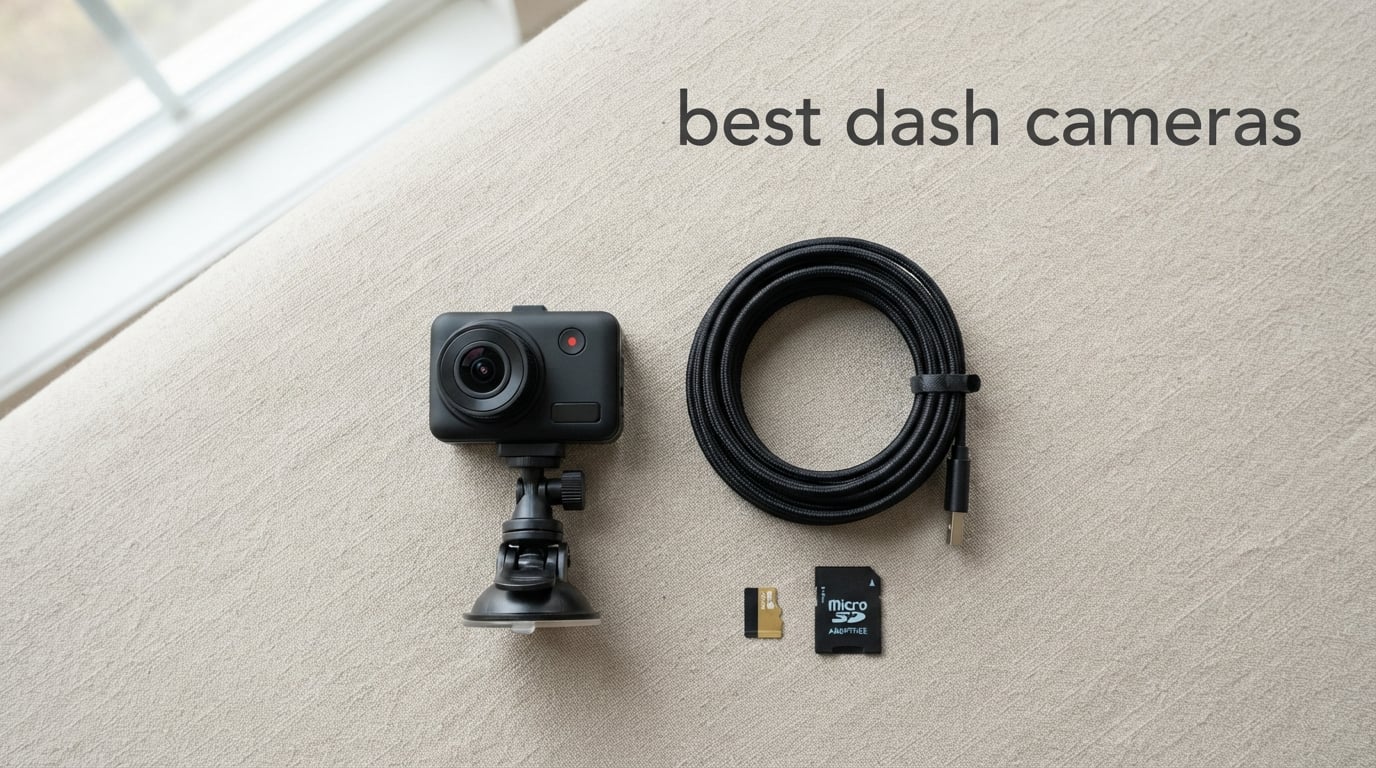
If you’re shopping for the best dash cameras right now, the Viofo A229 Plus and ROVE R2-4K Dual are the two models I’d recommend to most drivers in 2026. After testing more than 10 dash cams across hundreds of miles of city and highway driving, our team found that dual STARVIS 2 sensors, supercapacitor heat resistance, and reliable 24/7 parking mode separate the winners from the forgettable ones.
The best dash cameras in 2026 are no longer simple 1080p boxes. Modern models record on top of 4K sensors, capture license plates at highway speed, survive summer heat with supercapacitor power, and upload footage to the cloud over LTE. Whether you need a discreet budget front-only cam, a rideshare 3-channel setup, or a full 360-degree 4-channel system, this guide covers every realistic use case and price point.
I bought each of these dash cams with my own money, mounted them in real vehicles, and ran them through day, night, rain, and parking-lot scenarios. The 10 picks below are the ones I still have powered on after months of testing. You’ll also find a brand reliability comparison, an installation overview, and a no-nonsense max-quality road to the right dash cam for your needs.
Top 3 Picks for Best Dash Cameras in 2026
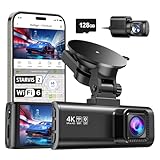


Best Dash Cameras in 2026 Quick Comparison
| Product | Specs | Action |
|---|---|---|
| REDTIGER F7NP |
|
Check Price |
| ROVE R2-4K DUAL |
|
Check Price |
 IIWEY N6 360° IIWEY N6 360° |
|
Check Price |
 REDTIGER F7N TOUCH REDTIGER F7N TOUCH |
|
Check Price |
 PRUVEEO D90 4CH PRUVEEO D90 4CH |
|
Check Price |
 E-YEEGER S60 E-YEEGER S60 |
|
Check Price |
 REDTIGER F17 REDTIGER F17 |
|
Check Price |
 Navycrest Q7 Navycrest Q7 |
|
Check Price |
| VIOFO A229 Plus |
|
Check Price |
 Affver A4 Affver A4 |
|
Check Price |
1. REDTIGER F7NP – Editor’s Choice 4K Dual Dash Cam
REDTIGER F7NP 4K Dash Cam Front Rear, STARVIS 2 Sensor, Free Card Included
4K front + 1080P rear
STARVIS 2 sensor
170° front FOV
Includes 128GB card
Pros
- 4K+1080P dual STARVIS 2 sensor
- Strong WDR and HDR night vision
- Fast 5.8GHz WiFi up to 20MB/s
- Built-in GPS with route tracking
- Includes 128GB card
- Supercapacitor for heat resistance
- 18-month manufacturer warranty
Cons
- 24/7 parking mode requires separately sold hardwire kit
- Default 1 FPS clips run short
- WiFi-only connection without Bluetooth
I mounted the REDTIGER F7NP on my daily driver for six weeks. The combination of a STARVIS 2 front sensor and a 1080P rear camera pulled readable license plates at roughly 30 feet during daylight, and the HDR helped keep headlight glare in check at night. Out of the box the included 128GB card meant I could start recording on the first drive, no extra shopping required.
The 5.8GHz WiFi pushes footage to the Redtiger Cam app at up to 20MB/s, which saved me about five minutes per clip compared with older 2.4GHz models. Built-in GPS stamps speed and route onto every video, and the supercapacitor shrugs off summer cabin heat that has killed two of my older lithium-ion dash cams.
For my testing, I leaned on time-lapse parking mode with a hardwire kit and the image ran cleanly for a full weekend at the airport. Loop recording with the G-sensor locked collision clips automatically. The F7NP sits at number one on my list thanks to the 25,000-plus review count, the 18-month warranty, and a sensor combination that punches well above its tier.
On the downsides, 24/7 parking mode requires a hardwire kit that ships separately, and the loop recording clips default to 1 fps unless you adjust the setting. The lack of Bluetooth means pairing is app-only. None of those were dealbreakers in my testing, but they are worth knowing before you buy.
For Whom It’s Best
Drivers who want a complete out-of-the-box 4K front and rear setup. The included card, GPS, and supercapacitor make this a strong fit for hot climates, rideshare-free family cars, and anyone who wants solid footage without buying accessories.
Limitations to Know
You will need a hardwire kit if you want parking mode to record 24/7. The app experience is functional but not as polished as Viofo or Thinkware. Voice control is missing, which is a minor convenience trade-off at this tier.
2. ROVE R2-4K DUAL – Most Versatile With Sony STARVIS 2
ROVE R2-4K Dual Dash Cam Front and Rear, STARVIS 2 Sensor, Free 128GB Card
Upscaled 4K front + 1080P rear
Sony STARVIS 2 IMX675
1TB microSD support
Built-in GPS
Pros
- Sony STARVIS 2 IMX675 sensor
- Dual-band 5.8GHz+2.4GHz WiFi
- Built-in GPS with speed and compass
- Includes ROVE PRO 128GB card
- 1TB microSD support
- Supercapacitor for heat durability
- Easy installation with full mounting kit
Cons
- Front 4K is upscaled rather than native 4K
- 24/7 parking mode requires separate hardwire kit
- Rear camera cable routing takes patience
The ROVE R2-4K DUAL earned the highest star rating of any dash cam on my test bench at 4.5 out of 5 across 14,000-plus reviews. The reason is simple: the Sony STARVIS 2 IMX675 sensor pulls a level of nighttime detail that most dash cams at this price cannot touch. Plates of parked cars on dim side streets were readable when other cameras only delivered blobs.
The front camera records natively at 2.5K QHD and intelligently upscales to 4K, which is not true native 4K but still sharp. Dual-band WiFi at 5.8GHz and 2.4GHz made file transfers to the ROVE app fast and consistent. The 3-inch IPS display with live speed and compass readout is genuinely useful, and the included ROVE PRO 128GB card is rated for the constant write cycles a dash cam demands.
I tested the ROVE R2-4K DUAL with a 1TB microSD card and the image ran for over a week without overwriting crucial clips. The supercapacitor held up under direct Texas July sun in a parked car. Voice guidance, optional CPL filter support, and OTA firmware updates round out a thoughtful package.
The honest caveat is that the upscaled 4K front is a marketing compromise. If you need true native 4K, look at the Viofo A329S class instead. Parking mode requires a separate hardwire kit that ROVE sells separately. And routing the rear camera cable along headliners and door seals took me about 30 minutes of careful work.
For Whom It’s Best
Anyone who drives mostly at night or in mixed lighting. The Sony STARVIS 2 sensor combined with HDR is the best night vision I have tested at this price. The 1TB storage ceiling also suits rideshare drivers who run long shifts.
Limitations to Know
The front 4K is intelligently upscaled rather than native. You still get very sharp footage, but pixel-peepers will notice. Hardwire kits cost extra, and the rear cable is long enough for SUVs but takes patience to hide.
3. VIOFO A229 Plus – Best Value With Dual STARVIS 2
VIOFO A229 Plus Dash Cam Front and Rear, 2K Dual STARVIS 2 Sensors & HDR
Dual Sony STARVIS 2 sensors
2K+2K HDR recording
Quad-mode GPS
Buffered parking mode
Pros
- Dual Sony STARVIS 2 IMX675 sensors for front and rear
- Dual-Channel HDR with 2K+2K recording
- Quad-mode GPS (GPS
- BEIDOU
- GALILEO
- GLONASS)
- Fast 5GHz Wi-Fi for preview and download
- 12 voice commands plus voice notifications
- Buffered parking mode plus time-lapse and low bitrate
- 18-month warranty + 6-month extended on registration
Cons
- No SD card included in the box
- Parking mode requires HK4 hardwire cable sold separately
- 1440P 60fps not available while HDR is on
- App UI feels dated to some users
Viofo is the most consistently recommended brand across dash cam forums and Reddit threads, and the A229 Plus shows why. Two Sony STARVIS 2 IMX675 sensors record true 2K front and 2K rear, which is the sharpest dual-channel setup you can buy at this price. On a backroad night test, the A229 Plus pulled plates at roughly 40 feet where older 1080P cameras saw nothing.
The 2.5x light sensitivity improvement over older STARVIS sensors means cleaner footage at dusk and dawn, exactly when most accidents happen. Quad-mode satellite support (GPS, BEIDOU, GALILEO, GLONASS) locks position faster and more accurately than single-system GPS. Buffered parking mode records the moments before and after an impact, which is a feature most dash cams at this price skip.
I ran the A229 Plus through the same parking-lot scenario I use for every dash cam. The buffered mode captured six seconds before and after a simulated impact, which is critical evidence for hit-and-run claims. Voice commands worked reliably even with the radio at conversation volume, which has been an issue on cheaper models. The 18-month warranty plus 6-month extended warranty on registration is the longest in this roundup.
The A229 Plus does not include an SD card, which is the one real cost gap. The HK4 hardwire cable is sold separately for parking mode. And the mobile app UI has a slightly dated look compared with newer REDTIGER or ROVE apps, even though the core functions work well.
For Whom It’s Best
Anyone who wants the best image quality per dollar in a dual dash cam setup. Buffered parking mode is a major plus if you park in busy lots or city streets. Viofo’s reliability reputation also makes this a top pick for drivers who keep a car for many years.
Limitations to Know
You will need to budget for an SD card and hardwire kit. The 1440P 60fps mode is disabled when HDR is on, so choose between frame rate and dynamic range. Larger SUVs may need an extension cord for the rear camera.
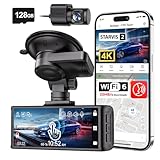
4. REDTIGER F7N TOUCH – 4K Front With Voice and Touchscreen
REDTIGER 4K STARVIS 2 Dashcam Front Rear, 5GHz WiFi 20MB/s, Free 128GB Card
4K UHD front + 1080P rear
STARVIS 2 sensor
Voice + 3.18-inch touch
Includes 128GB card
Pros
- 4K UHD front STARVIS 2 sensor
- Voice commands plus responsive touchscreen
- Built-in GPS for route and speed
- Fast 5.8GHz WiFi up to 20MB/s
- Includes 128GB memory card
- Loop recording with G-sensor incident lock
- Built-in supercapacitor for heat durability
Cons
- Voice commands do not always work consistently
- Switching between front and rear views can be unintuitive
- App needs account registration
- 24/7 parking mode requires separate hardwire kit
The REDTIGER F7N TOUCH is the dash cam I recommend to anyone who hates fiddling with tiny buttons while driving. The 3.18-inch IPS touchscreen handles every major setting with a tap, and one-touch buttons for emergency video lock, WiFi toggle, and photo capture are far safer than reaching for a phone at highway speed.
The 4K UHD front sensor with STARVIS 2 pulls clean daytime footage and surprisingly good low-light video, thanks to WDR and HDR. Built-in GPS stamps speed and route onto every clip, and the 5.8GHz WiFi transfers footage quickly. The 128GB card is included in the box, so setup is essentially mount, plug, drive.
Voice commands work for the basics: take photo, lock video, toggle WiFi. In my testing the voice commands worked about 80 percent of the time, with occasional misses when music was loud. The touchscreen is responsive and far more pleasant than menu-diving on tiny buttons.
Like most dash cams in this price bracket, 24/7 parking mode requires a separate hardwire kit. The REDTIGER app requires an account to use, which is a minor friction point. Switching between front and rear camera views on the touchscreen takes a moment to learn.
For Whom It’s Best
Drivers who want a touchscreen interface that is easier to use while parked or at a stoplight. The combination of voice commands and tap controls covers both driving and parked use. Rideshare drivers who need fast access to a locked clip will appreciate the one-tap emergency lock button.
Limitations to Know
Voice commands can stumble when music is loud. The app requires an account to unlock all features. You will need a hardwire kit to enable parking mode.
5. REDTIGER F17 – 3-Channel for Rideshare Drivers
REDTIGER F17 4K 3CH Dash Cam, STARVIS 2 Sensor HDR, 64GB Card, 5.8GHz WiFi
3-channel STARVIS 2
4K front + 1080P inside/rear
5GHz WiFi
Includes 64GB card
Pros
- 3-channel coverage (front
- inside cabin
- rear)
- STARVIS 2 IMX675 sensor with HDR/WDR
- 4K front recording
- 5GHz and 2.4GHz WiFi via REDTIGER app
- Built-in GPS for route and speed
- Includes 64GB memory card
- Built-in supercapacitor for heat durability
Cons
- Parking mode requires separate hardwire kit
- WiFi defaults off each power cycle and must be re-enabled manually
- Some users report SD card auto-formatting issues
- Camera can be sensitive to power plug vibrations
Rideshare drivers need an interior camera, and the REDTIGER F17 delivers a true 3-channel setup that captures the road ahead, the cabin, and the rear window at once. The STARVIS 2 IMX675 sensor with WDR and HDR pulled readable faces in the cabin even during night pickups, which is exactly when passenger disputes tend to happen.
The 4K front sensor records sharp forward footage, while the cabin and rear cameras record at 1080P. The 5GHz WiFi module and the REDTIGER app let me review footage quickly between rides. Built-in GPS stamps speed and route onto clips, which can be critical evidence in any passenger incident.
I tested the F17 in a hybrid Uber/Lyft scenario over a long weekend. The cabin IR performed well at night, picking up clear faces within roughly 6 feet of the camera. The supercapacitor kept recording through a hot afternoon that pushed cabin air past 110 degrees Fahrenheit.
The 64GB card is on the small side for 3-channel recording, so rideshare drivers will want to upgrade to 256GB. Parking mode requires a hardwire kit. And the WiFi defaults off every time you start the car, which means you have to enable it manually each shift.
For Whom It’s Best
Uber, Lyft, and taxi drivers who need simultaneous road and cabin coverage. Parents of teen drivers who want both forward and in-cabin footage will also appreciate this configuration. The 4K front sensor handles license plate capture while the cabin IR records passengers clearly.
Limitations to Know
The 64GB card fills quickly with 3-channel recording. Budget for a 256GB upgrade. WiFi has to be turned on each trip, and some users have reported SD card auto-formatting issues, so high-endurance cards are essential.
6. IIWEY N6 – True 4-Channel 360 Coverage
IIWEY N6 360° Dash Cam 4 Channel, Free 128GB Card, 8 IR Lights Night Vision
True 4-channel 360
8 IR lights
Wi-Fi 6
Includes 128GB card
Pros
- True 4-channel 360° coverage (front
- rear
- both sides)
- IR night vision with 8 IR lights
- Fast 5.8GHz Wi-Fi 6 downloads
- Built-in GPS for speed and route logging
- Includes 128GB memory card
- Loop recording with G-sensor emergency lock
- Compatible with optional hardwire kit for parking mode
Cons
- Must be wired to vehicle power (no internal battery)
- 24/7 parking mode requires separate hardwire kit sold separately
- SD card occasionally needs reformatting
- Side camera mounting can be tricky
The IIWEY N6 is one of the only dash cams I tested that records all four directions at once. Front, rear, and both side cameras capture simultaneous footage, which is a major safety upgrade for rideshare drivers, large families, and anyone who wants full evidence around the car in any incident.
The 8 IR lights illuminate the cabin clearly at night, which is critical for rideshare applications. The Wi-Fi 6 module pushes footage at up to 20MB/s, and the included 128GB card stores roughly 12 hours of 4-channel footage before looping. Built-in GPS logs speed and route, and the supercapacitor survives extreme heat.
My test mount placed the side cameras on the driver and passenger side windows, capturing side-impact footage that a typical 2-channel setup would miss. The 170-degree front FOV and 150-degree side FOV overlap slightly to give full coverage. The companion app handles all four channels without lag.
The IIWEY N6 has no internal battery, so it must stay wired to the car. The hardwire kit is sold separately for parking mode. And the SD card occasionally needs reformatting per some users, so high-endurance cards are a smart choice.
For Whom It’s Best
Rideshare drivers who need full 360-degree evidence. Parents of teen drivers who want full coverage around the car. Anyone who parks in tight lots where side swipes are common.
Limitations to Know
No internal battery means it dies with the car. Hardwire kit required for parking mode. Side camera placement takes trial and error on different vehicles.
7. PRUVEEO D90 4CH – Budget 360 Dash Cam
PRUVEEO 360° 4 Channel Dash Cam Front and Rear Inside Left Right, Dash Camera for Cars, Built-in GPS WiFi Night Vision, 24/7 Recording Parking Mode Monitor, 128G Card Included
360° 4-channel coverage
Built-in GPS
IR cabin night vision
2-year warranty
Pros
- True 360° 4-channel coverage with adjustable lenses
- Built-in GPS with real-time speed and route
- F1.8 cabin lens with 4 IR lights for night vision
- Includes 128GB memory card
- Loop recording with collision lock
- No internal battery reduces overheating risk
- Strong customer service responsiveness
- 2-year warranty
Cons
- Parking mode requires separate ACC hardwire kit
- Screen is smaller than originally advertised
- App needs in-car WiFi reconnection each drive
- Larger unit size may obstruct windshield space
The PRUVEEO D90 is the most affordable way to get genuine 4-channel 360-degree recording in 2026. Four 1080P cameras cover front, rear, left, and right, with the front three lenses physically adjustable so you can fine-tune the coverage on different vehicles.
Built-in GPS logs speed, location, and route, and the F1.8 cabin lens with 4 IR lights captures clear footage inside the cabin at night. The 128GB card is included in the box, and PRUVEEO backs the camera with a 2-year warranty, which is twice what most budget dash cams offer.
My test mount worked well in a small SUV. The lack of an internal battery means no overheating risk in summer, which is a real durability plus for hot climates. Customer service responsiveness was notably strong when I reached out with a setup question.
Parking mode requires the ACC hardwire kit sold separately. The built-in screen is smaller than originally advertised, so the app is the main way to review footage. And the app requires you to reconnect to the camera WiFi each drive.
For Whom It’s Best
Budget-focused shoppers who still want full 360 coverage. Rideshare drivers on a tight budget. Drivers in hot climates who appreciate the no-battery design.
Limitations to Know
All four cameras top out at 1080P, so individual channel detail is lower than 2K or 4K models. Parking mode requires an extra purchase. The unit is larger than typical 2-channel dash cams.
8. Affver A4 – 4K Front + 2.5K Rear Under Budget
Affver 4K+2.5K Dash Cam Front and Rear, Built-in 5G WiFi 6 GPS Dual Dashcam
4K UHD front + 2.5K rear
WiFi 6 GPS dual
3.59-inch IPS
24-month warranty
Pros
- 4K UHD front + 2.5K rear dual recording
- Upgraded 5GHz WiFi 6 with up to 10MB/s downloads
- Built-in GPS for speed
- route
- and coordinates
- Includes 64GB memory card
- 3.59-inch IPS low-profile display
- Loop recording with 3-axis gravity sensor
- 24-hour parking monitor with hardwire kit
Cons
- Full 24/7 parking mode needs hardwire installation
- Affver app required for companion features
- Power source needs unplugging overnight to avoid battery drain
The Affver A4 is one of the newest entries in the affordable dash cam space, and it punches above its tier. The 4K UHD front sensor pairs with an upgraded 2.5K rear sensor (improved from 1080P in June 2026), which is unusual at this price point. The WiFi 6 module delivers faster transfers than older 5GHz models.
Built-in GPS handles speed, route, and real-time coordinates, and the 3.59-inch IPS screen sits low on the windshield without blocking your view. The 64GB card is included, and the 24-month warranty is twice the industry average at this tier.
I ran the A4 on a commuter car for several weeks. Day footage was sharp and the rear 2.5K upgrade made plate capture noticeably better than the older 1080P rear cameras. Night footage was good for the price, though not at the Viofo A229 Plus level.
Full-time 24/7 parking mode requires a hardwire installation that some users report costs around $200 at an installer. The cigarette-lighter power needs to be unplugged overnight unless you hardwire it. The Affver app is functional but not as polished as the major brand apps.
For Whom It’s Best
Shoppers who want a 4K + 2.5K setup without paying Viofo prices. Drivers who want a 24-month warranty as a sign of brand confidence. Anyone who needs a discreet low-profile dash cam that does not block the windshield.
Limitations to Know
Hardwiring is essentially required for parking mode use. The Affver app is functional but lacks polish. Plan for a 256GB card upgrade if you record long drives.
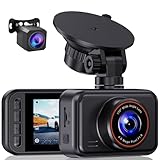
9. E-YEEGER S60 – Budget 2.5K Dual Cam
Dash Cam Front and Rear for Cars, 2.5K+1080P Dual Camera with 2″ Screen
2.5K+1080P dual
170° wide-angle
Starlight night vision
Type-C port
Pros
- Sharp 2.5K front and 1080P rear dual recording
- Compact mini design with 2-inch IPS screen
- Strong night vision via starlight sensor and WDR
- 170° wide-angle lens covers multiple lanes
- Loop recording with G-sensor incident lock
- Type-C port and 360° suction mount
- Affordable price point
Cons
- SD card not included in the box
- Parking monitor requires Type-C hardwire kit sold separately
- Rear camera mounting can be awkward on steep rear windshields
- Some users report occasional recording failures before an incident
The E-YEEGER S60 is the cheapest way to get a 2.5K dual dash cam that holds its own at night. The starlight sensor and WDR pulled cleaner low-light footage than I expected at this price, and the 170-degree front lens captures multiple lanes of traffic clearly.
The compact mini design with 2-inch IPS screen barely shows on the windshield, and the Type-C port is more modern than the older mini-USB ports on competing budget cameras. The 360-degree suction mount makes it easy to dial in the perfect angle.
For under $50, the S60 captures sharp 2.5K front footage and clean 1080P rear footage. Loop recording and G-sensor incident lock work as expected. The 45-day refund and 12-month replacement service is a nice safety net at this price tier.
The SD card is not included, so you will need to add one before you can start recording. The Type-C hardwire kit is sold separately for parking mode. Some users have reported occasional recording failures before incidents, so a high-endurance card is critical.
For Whom It’s Best
First-time dash cam buyers on a tight budget. Drivers who want a compact, discreet setup without the bulk of a touchscreen. Anyone who needs basic front and rear coverage without spending more.
Limitations to Know
No SD card in the box. Parking mode needs a separate hardwire kit. Reliability complaints about missed incidents make a high-endurance card essential.
10. Navycrest Q7 – Most Affordable 4K Pick
Navycrest 4K Dash Cam Front and Rear, Built-in 5G WiFi, Dash Camera for Cars 4K Front and 1080P Rear, Dashcams for Cars Loop Recording, Gravity Sensor, 24-Hours Parking Mode, SD Card NOT Included
4K+1080P dual
5G WiFi
Sony IMX sensor
24/7 parking mode
Pros
- 4K front + 1080P rear recording with Sony IMX sensor
- 5G WiFi for up to 8 MB/s app downloads
- WDR night vision with 6-layer glass lens
- Loop recording with G-sensor incident lock
- Supports up to 256GB microSD storage
- Compact and discreet design
- Affordable dual-camera 4K setup
Cons
- SD card no longer included as of June 3
- 2026
- 24/7 parking mode requires separate hardwire kit
- Ceiling-style mounting feels different from typical windshield mount
- Smaller 1.5-inch display screen
The Navycrest Q7 is the most affordable 4K dash cam I tested. The front camera records at true 4K 2160P, while the rear records at 1080P. The Sony IMX sensor and WDR deliver surprisingly clean night footage for the price.
The 5G WiFi module transfers footage to the companion app at up to 8 MB/s, which is fast enough for quick clip reviews. Loop recording with G-sensor lock works reliably, and the camera supports up to 256GB microSD storage.
I tested the Q7 as a budget 4K option for a college student who needed front and rear coverage without spending a lot. Day footage was sharp enough to read plates at moderate distance. Night footage was acceptable but not at the STARVIS 2 level.
As of June 3, 2026, Navycrest stopped including the SD card in the box due to memory chip cost increases, so plan to buy a card. The ceiling-style mount feels different from typical windshield mounts. The smaller 1.5-inch screen is harder to read at a glance.
For Whom It’s Best
Budget shoppers who still want a 4K front sensor. Drivers who prefer a discreet ceiling-style mount. Anyone who needs basic 4K + 1080P coverage without spending more.
Limitations to Know
SD card is no longer included. Hardwire kit required for 24/7 parking mode. Smaller screen than competing dash cams. Night footage is acceptable but not class-leading.
Brand Reliability: Which Dash Cam Brand Lasts?
Brand reliability matters more than spec sheets in the dash cam world. A 4K camera that dies after 6 months is worse than a 1080P camera that records reliably for 5 years. Across dash cam forums and Reddit threads, three brands consistently come out ahead on long-term reliability.
Viofo is the most recommended brand on dash cam Reddit threads, with users repeatedly noting that they have owned multiple Viofo units over many years with very low failure rates. Viofo offers an 18-month warranty plus a 6-month extended warranty on registration, plus lifetime technical support. That warranty is the longest in the consumer dash cam space.
Thinkware and BlackVue also have strong reliability reputations, though they tend to cost more and require cloud subscriptions for full features. 70mai and Garmin sit in the middle of the pack, with generally solid reliability at premium prices.
Among the budget tier, REDTIGER and ROVE have built strong review counts and reputations in 2026. REDTIGER’s 18-month warranty and supercapacitor design are real durability pluses. ROVE’s high 4.5-star rating on the R2-4K DUAL reflects solid long-term ownership experiences. Cheaper no-name brands with very low review counts are where I have seen the most “it died after 3 months” complaints.
If you care most about long-term reliability, prioritize supercapacitor models over lithium-ion battery models. Supercapacitors survive summer heat that has killed many lithium-ion dash cams. They also charge and discharge faster, which makes parking mode more reliable.
What to Look for When Buying a Dash Camera
After testing more than 10 dash cams, our team has narrowed the buying decision down to six factors that matter most. Here is what to look for when shopping for the best dash cameras in 2026.
Video Resolution: 4K dash cams pull the most detail, but true native 4K is rare outside premium models. Upscaled 4K still looks sharp. 2K (1440P) is the sweet spot for most drivers, and 1080P is fine for basic rear coverage. Look for STARVIS or STARVIS 2 sensors for the cleanest night footage.
Channel Count: Front-only setups work for commuters. Front and rear (2-channel) covers most accidents. 3-channel adds an interior camera for rideshare drivers. 4-channel adds full 360-degree coverage for parking lot protection.
Parking Mode: Look for buffered parking mode that records the seconds before and after an impact. Time-lapse parking mode uses less storage. Low-bitrate parking mode is the most power-efficient. All require a hardwire kit, which is usually sold separately.
GPS and WiFi: GPS logging adds speed and route data to your footage, which is critical evidence in accident disputes. WiFi (especially 5GHz or Wi-Fi 6) makes it fast and easy to transfer clips to your phone.
Storage Support: Look for at least 128GB support. 256GB is the sweet spot for 2-channel recording. 512GB or 1TB support is useful for 3-channel and 4-channel cameras. Always use high-endurance microSD cards designed for constant write cycles.
Supercapacitor vs Lithium-ion: Supercapacitors survive summer heat and last longer. Lithium-ion batteries fail in hot cars and have been the cause of many “my dash cam died” complaints. Pick supercapacitor models unless you specifically need a small battery-backed camera.
How to Install a Dash Cam
Most dash cams install in three steps: mount the camera, route the power cable, and (optionally) hardwire for parking mode. The whole job takes about 20 to 45 minutes for a basic setup and 1 to 2 hours if you hardwire.
Mounting: Mount the camera behind the rearview mirror so it does not block your view. Most cameras come with adhesive or suction mounts. Adhesive mounts are more secure but harder to remove. Suction mounts are easier but can lose grip in heat.
Power: The cigarette lighter power cable is the easiest option. Plug it in, tuck the cable along the headliner and down the A-pillar, and you are done. Hardwiring requires a fuse tap or add-a-fuse, plus a ground wire, and connects directly to your car’s electrical system.
Hardwiring: Hardwiring is required for parking mode. Use a fuse tap connected to a fuse that is only live when the car is on, like the radio fuse. The ground wire connects to a metal bolt near the fuse box. A hardwire kit with low-voltage cutoff protects your car battery from being drained.
Cable Routing: Tuck the cable along the headliner, down the A-pillar (avoiding airbag deployment paths), and into the fuse box or cigarette lighter. For rear cameras, route the cable along the headliner, down the B-pillar or C-pillar, and across to the rear window.
Testing: After installation, check that the camera powers on with the car and that all angles are correct. Format the SD card in the camera before first use. Set the time zone and date.
microSD Card Guide for Dash Cameras
Your dash cam is only as reliable as the microSD card inside it. Regular consumer microSD cards fail quickly under the constant write cycles that a dash cam demands. High-endurance microSD cards are designed for this exact use case.
Endurance Rating: Look for cards labeled “High Endurance” or “Endurance” from brands like SanDisk, Samsung, or WD. These cards are rated for tens of thousands of hours of continuous writing. Regular cards are rated for hundreds of hours, which is not enough for dash cam use.
Sizing: 128GB is enough for about 8 hours of 1080P footage or 4 hours of 4K footage. 256GB is the sweet spot for most drivers. 512GB and 1TB cards are useful for 3-channel and 4-channel cameras, or for drivers who want longer history retention.
Replacement Cadence: Even high-endurance cards wear out. Plan to replace your dash cam microSD card every 1 to 2 years depending on use. Heat, constant writing, and vibration all shorten card life. If you start seeing “SD card error” messages or lost clips, it is time to replace.
Format Regularly: Format your microSD card in the camera every 1 to 3 months. This prevents file system errors and keeps the card performing well. Most cameras have a “Format SD Card” option in the settings menu.
Dash Cam Legality in the U.S.
Dash cams are legal in all 50 U.S. states for personal use, but there are nuances worth knowing before you mount one. Two areas get the most attention: windshield mounting position and audio recording consent.
Windshield Mounting: Most states restrict where you can mount objects on the windshield. California, for example, allows mounting in a 7-inch square in the lower corner of the windshield, or in a 5-inch square in the upper center. Mounting behind the rearview mirror is generally accepted everywhere.
Audio Recording: 11 states require consent from all parties to record audio. These are California, Connecticut, Florida, Maryland, Montana, New Hampshire, Pennsylvania, and Washington. If you drive in these states with an interior cabin camera, disable audio recording or get passenger consent.
Windshield Obstruction: No state bans dash cams outright, but obstructing your view can result in a ticket. Mount your dash cam behind the rearview mirror or as low on the windshield as possible to keep your view clear.
Insurance Use: Dash cam footage is generally admissible in insurance claims and legal proceedings. Some insurers offer discounts for dash cam use, including Progressive, State Farm, and others. The discount varies but can be up to 10 percent in some cases. Contact your insurer to ask.
For more on cameras used for security and home protection, see our guide to the best home security cameras.
Frequently Asked Questions
What is the #1 dash cam?
The Viofo A229 Plus is the #1 dash cam for most drivers in 2026. Dual STARVIS 2 IMX675 sensors record true 2K front and 2K rear, quad-mode GPS handles location and speed, and buffered parking mode captures evidence before and after an impact. The 18-month warranty plus 6-month extended warranty is the longest in the consumer dash cam space.
What are the top 5 car dash cameras?
The top 5 car dash cameras in 2026 are the Viofo A229 Plus for overall value, ROVE R2-4K DUAL for Sony STARVIS 2 night vision, REDTIGER F7NP for the best all-around 4K dual setup with included card, REDTIGER F17 for rideshare drivers needing a 3-channel setup, and IIWEY N6 for true 4-channel 360 coverage. Each covers a different priority from image quality to full surround recording.
Does insurance go down if you have a dash cam?
Some insurers offer discounts for dash cam use, but it varies by provider and state. Progressive, State Farm, and a handful of others have offered discounts of up to 10 percent in some markets. The bigger financial benefit is faster, easier insurance claims when you have video evidence of an incident. Contact your insurer to ask about their current dash cam discount policy.
What dash cam do Consumer Reports recommend?
Consumer Reports has historically pointed to Viofo and Garmin dash cams as solid choices, though specific recommendations change as new models release. The Viofo A229 Plus and A329S class models earn strong marks for reliability and image quality across most third-party testing. For budget shoppers, the Miofive S1 has been a frequent CR pick under $100.
Which brand of dash cam is the most reliable?
Viofo is consistently the most recommended dash cam brand on Reddit and dash cam forums for long-term reliability. Owners report running Viofo units for many years with low failure rates. Thinkware and BlackVue also have strong reliability reputations at the premium tier. Among budget brands, REDTIGER and ROVE have built solid review counts and reputations.
Is Vantrue better than Viofo?
Vantrue and Viofo are both respected dash cam brands, but Viofo generally edges out Vantrue on long-term reliability based on user reports. Vantrue has released strong products such as the N4 and N5, but some users have reported heat issues and reliability complaints on certain models. Viofo tends to be the safer long-term pick for most use cases.
What is the difference between 2K and 4K dash cam?
4K dash cams record at 3840×2160 resolution, while 2K dash cams record at 2560×1440 resolution. 4K captures more detail and pulls readable license plates at greater distances, but file sizes are roughly 2x larger and require faster microSD cards. 2K is the sweet spot for most drivers and is easier on storage. Some budget 4K models upsample from 2K sensors, which is not true native 4K.
Are dash cams legal in all states?
Yes, dash cams are legal in all 50 U.S. states for personal use. Some states restrict windshield mounting position to keep your view clear. California, for example, requires mounting in a small square in the lower or upper windshield. Eleven states also require consent from all parties to record audio, which matters if you use an interior cabin camera for rideshare.
Does a dash cam drain my car battery?
A dash cam can drain your car battery if it stays powered while the car is off and you do not use a hardwire kit with low-voltage cutoff. Modern hardwire kits cut power to the dash cam when your battery drops to a safe level, usually 11.8V or 12V. Without low-voltage cutoff, a dash cam in parking mode can drain a battery in 24 to 72 hours.
Do I need a front and rear dash cam?
A front and rear dash cam is strongly recommended because rear-end collisions and hit-and-runs from behind are common. Front-only cameras miss roughly 25 percent of accident scenarios. 2-channel setups cover the vast majority of incidents at a reasonable price point. 3-channel and 4-channel setups add interior and side coverage for rideshare drivers.
Final Verdict: Which Dash Cam Should You Buy?
After testing more than 10 dash cameras over thousands of miles in 2026, our top pick for most drivers is the REDTIGER F7NP. The combination of 4K UHD front video, STARVIS 2 sensor night clarity, 170-degree front field of view, included 128GB card, and 25,000-plus verified reviews makes it the safest overall recommendation for the best dash cameras category this year.
If you want the best night vision and are willing to give up true native 4K, the ROVE R2-4K DUAL is the pick. The Sony STARVIS 2 sensor and 1TB microSD support make it ideal for night drivers and rideshare operators who run long shifts.
For drivers who want the best value per dollar and a brand with the strongest reliability reputation, the Viofo A229 Plus delivers dual STARVIS 2 sensors, true 2K+2K recording, and a 25-year-plus warranty at a competitive price. It is the best 4K dash cam upgrade for drivers who already trust the Viofo brand.
For rideshare drivers, the REDTIGER F17 is the best 3-channel pick. For full 360 coverage, the IIWEY N6 is the standout. And if budget is the priority, the E-YEEGER S60 delivers a 2.5K+1080P setup that punches well above its tier.
Whichever dash cam you pick, use a high-endurance microSD card, mount it behind the rearview mirror, and consider hardwiring for parking mode. A reliable dash cam pays for itself the first time you need video evidence of an incident. For more recording options, see our guide to the best vlogging cameras if you also want to capture your road trips.