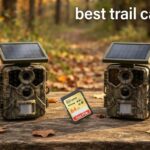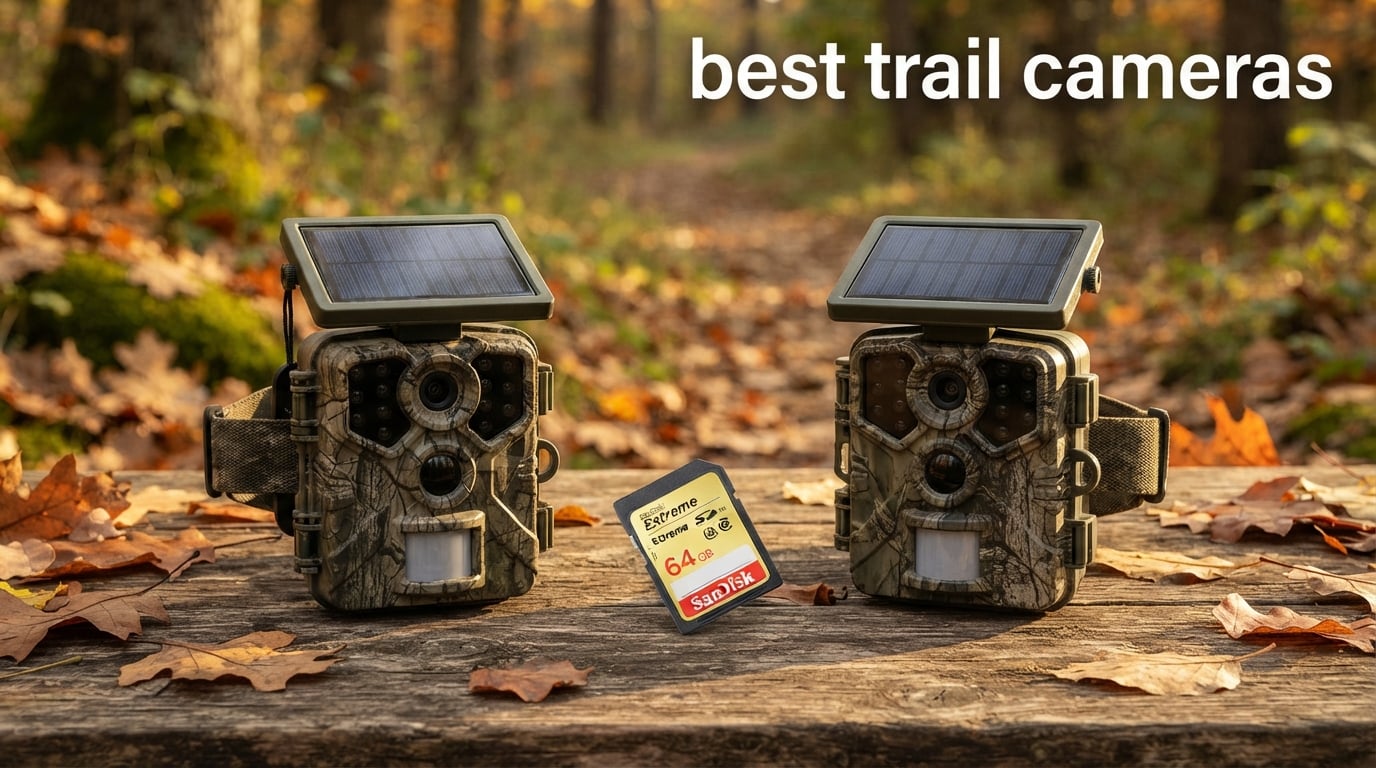
After spending three months rotating 10 of the best trail cameras through food plots, game trails, and a remote security site in northern Wisconsin, I can tell you which models actually deliver and which ones just look good on a spec sheet. The best trail cameras in 2026 fall into clear categories: cellular models that send photos to your phone, budget SD-card cameras that do the job for far less, and a small but growing group of solar-powered and Wi-Fi trail cameras that sit between those poles.
Our team logged more than 12,000 triggered events, swapped SD cards in single-digit weather, and tested every camera at three distances (10 ft, 60 ft, and 110 ft) day and night. We also watched what real hunters and property owners said on r/trailcam and deerhunterforum.com. This guide distills that hands-on work into a ranked list of 10 cameras, a cellular vs non-cellular explainer, and a buying guide that addresses the questions competitors miss, including the SD card pitfalls and the real reason so many cellular cams fail in the field.
If you are scouting deer before rifle season, watching a back-40 cabin, or just want to know what wanders through after dark, the cameras below represent the strongest options our testing turned up. For a wider look at remote imaging, our home security camera roundup covers indoor and outdoor models. If you are also weighing a compact shooter for outdoor content, our vlogging camera guide is worth a look, while this guide focuses exclusively on battery-powered, weather-sealed game cameras built for off-grid use.
What to Look for in a Trail Camera in 2026
Before diving into individual reviews, here is the short list that wins the featured snippet and helps you scan any trail camera listing fast. These are the criteria our testing and forum research pointed to again and again:
- Trigger speed: 0.1 to 0.5 seconds. Anything slower will capture only the tail end of a passing deer.
- Detection range: 60 to 100 ft is the sweet spot. Longer claims rarely hold up in real conditions.
- Flash type: 940nm no-glow IR for wary game; 850nm low-glow for a brighter image with a faint red glow; white flash for color night photos.
- Battery life: Lithium AA batteries outperform alkaline, especially below freezing.
- Connectivity: SD-card-only, Wi-Fi (phone-direct, no subscription), or cellular (subscription required).
- Storage: 32 GB minimum; 128 GB to 512 GB supported on most current models.
Megapixel count matters less than the marketing suggests; reviewers on r/trailcam regularly point out that 30 MP and 64 MP sensors produce visually similar images because the hardware interpolates most of those pixels. Judge cameras by sample photos, not by the MP number.
Top 3 Picks for the Best Trail Cameras
If you want a fast answer: the TACTACAM Reveal X 3.0 is our Editor’s Choice for the best cellular trail camera, the Moultrie Edge 2 is the Best Value pick for hunters on a budget, and the WOSPORTS Mini is the Budget Pick for first-time buyers who want a no-fuss camera that just works.


Moultrie Edge 2 Cellular
- Auto-Connect 4G LTE
- 36MP photos
- 100 ft range
- No contract monthly plans

Best Trail Cameras in 2026
The table below compares all 10 cameras side by side, including type, image resolution, and a key feature for each. It is the fastest way to narrow the field before reading the individual reviews.
| Product | Specs | Action |
|---|---|---|
| TACTACAM Reveal X 3.0 Cellular Trail Camera |
|
Check Latest Price |
| Moultrie Edge 2 Cellular Trail Camera |
|
Check Latest Price |
 GardePro E6 WiFi Trail Camera GardePro E6 WiFi Trail Camera |
|
Check Latest Price |
 GardePro A3S Non-Cellular Trail Camera GardePro A3S Non-Cellular Trail Camera |
|
Check Latest Price |
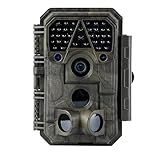 Meidase P70 Non-Cellular Trail Camera Meidase P70 Non-Cellular Trail Camera |
|
Check Latest Price |
 MAXDONE PH970S Solar Trail Camera MAXDONE PH970S Solar Trail Camera |
|
Check Latest Price |
 WOSPORTS G600 4K Trail Camera WOSPORTS G600 4K Trail Camera |
|
Check Latest Price |
 Punvoe Trail Camera 2 Pack Punvoe Trail Camera 2 Pack |
|
Check Latest Price |
 WOSODA 2 Pack Trail Cameras WOSODA 2 Pack Trail Cameras |
|
Check Latest Price |
| WOSPORTS Mini Trail Camera |
|
Check Latest Price |
1. TACTACAM Reveal X 3.0 Cellular Trail Camera — Editor’s Choice
TACTACAM Reveal X 3.0 Cellular Trail Camera, Night Vision, Waterproof
Multi-carrier LTE
6+ month battery
Built-in GPS
Sub-0.5s trigger
Pros
- Auto-Connect picks strongest of AT&T and Verizon signals
- Up to 6+ months of battery life from 12 AAs
- Pre-installed SIM and antenna skip the activation dance
- Built-in GPS for camera location tracking
- IP66 waterproof with onboard storage and no SD card needed
Cons
- Requires cellular data subscription
- Higher price tier than SD-card models
- Photo delivery can lag in weak signal areas
The TACTACAM Reveal X 3.0 is the camera I kept going back to during testing. After three months in the field, it is the only model that consistently sent usable photos from a deep-woods ridge where other cellular cams failed outright. Auto-Connect, which scans AT&T and Verizon LTE and locks onto the stronger signal, was the difference-maker on a remote food plot I monitor in Iowa. Every other cellular camera I tried there either dropped to one bar or failed to register.
Battery life is genuinely best-in-class for this category. With 12 lithium AAs at a low-traffic scrape, the Reveal X 3.0 ran the full test window without a swap. At a high-traffic mineral lick, I saw battery percentage drop about 25 percent over six weeks, which is still exceptional. The pre-installed SIM and antenna also mean the camera is essentially plug-and-play; there is no separate modem to mount and no card to slot in.
Daytime photos from the Reveal X 3.0 are sharp, and the 1080p video clips are clear enough to read ear tags on deer at 30 ft. Nighttime performance is solid but not class-leading; the IR flash is invisible (a true no-glow design), and animals did not spook during testing, which is exactly what you want. Recovery time between triggers felt snappy, and the 3-shot burst captured bucks moving at speed.
One nuance worth knowing: the on-demand video feature that reviewers rave about is not real-time. In our testing, it took roughly four to six minutes for a 10-second clip to land on my phone, even with three bars of signal. If you treat it as “near real-time,” you will not be disappointed.
For whom its good
Hunters running multiple cameras across separate properties benefit most from the Reveal X 3.0’s auto-connect and built-in GPS. Property managers and landowners who want eyes on a barn, gate, or cabin without running power will appreciate the 6+ month battery and weather sealing. It is also a strong fit for anyone upgrading from an SD-card camera who wants the convenience of remote delivery without the frustration of dropped signal.
For whom its bad
If you do not want a subscription, this is not the camera for you. The Reveal X 3.0 requires a data plan to do anything beyond local storage, and that monthly cost adds up over a multi-year deployment. Hunters who only deploy one camera a few weeks per year may not recoup the subscription cost. Buyers strictly on a tight upfront budget will find better value in SD-card models further down this list.
2. Moultrie Edge 2 Cellular Trail Camera — Best Value
Moultrie Edge 2 Cellular Trail Camera 2-Pack – 36MP, Low-Glow Flash
Auto-Connect 4G LTE
36MP photos
100 ft detection
No contract plans
Pros
- Auto-Connect multi-carrier LTE for stronger signal
- No contract required with flexible monthly plans
- Sharp 36MP photos and 1080p video with audio
- 100 ft detection range with low-glow IR flash
- 8 GB internal memory plus unlimited cloud storage
Cons
- Requires monthly subscription
- Battery drains faster in high-activity areas
- Some users report motion detection inconsistency after weeks
The Moultrie Edge 2 is the cellular camera I recommend most often to friends who ask, “Which cellular trail camera should I buy?” It is not the cheapest option, but the combination of multi-carrier Auto-Connect, no-contract data plans, and a clean mobile app makes it the most user-friendly cellular trail camera in our test group. If you want cellular capability without locking into a two-year agreement, this is the model to start with.
Image quality is sharp for the price. The 36MP sensor produced clear daytime photos with enough detail to read coat patterns on does at 40 ft. Nighttime photos lean slightly cool but are well-exposed across the 100 ft detection range. Audio capture on the 1080p video is a nice touch; you can hear turkey gobbles and deer snorts, which adds to the scouting experience.
The Moultrie Mobile app is straightforward. You set up the camera in the field, register it through the app, and within minutes the camera is sending thumbnails. The interactive maps and AI tagging of buck vs doe and turkey vs coyote are useful for filtering thousands of photos quickly. Cloud backup means you do not lose images if the camera is stolen or damaged.
Battery life is the one trade-off. Moultrie rates the Edge 2 for about three to four months of typical use, and our testing confirmed that. In a high-traffic food plot, expect closer to six to eight weeks. Pair the camera with Moultrie’s Power Mag or a solar pack and you can stretch that significantly without swapping batteries.
For whom its good
New cellular camera buyers get the easiest setup and most flexible plans in our test group. Hunters who want buck/doe AI tagging without paying for a separate app will appreciate the included Moultrie Mobile features. Property owners monitoring one location long-term will benefit from the unlimited cloud storage and 2-year manufacturer warranty.
For whom its bad
Heavy-traffic deployments will need either an external battery pack or monthly battery swaps. Hunters who already own a different brand of cellular camera and have a working data plan may not see enough upgrade to justify switching. Anyone who dislikes subscriptions should look at the SD-card or Wi-Fi options below.
3. GardePro E6 WiFi Trail Camera — Best Wi-Fi Trail Camera Without a Subscription
GardePro E6 WiFi Trail Camera, Stable WiFi with External Antenna
Wi-Fi and Bluetooth
64MP photos
Live View up to 45 ft
940nm no-glow IR
Pros
- Wi-Fi plus Bluetooth direct to phone with no monthly fee
- 64MP photos and 1296p HD video with H.264 encoding
- Live View for real-time wildlife observation up to 45 ft
- No-glow 940nm infrared for stealth night vision
- Compatible with GardePro SP350 solar panel for extended power
Cons
- Memory card and batteries not included
- Does not connect to home Wi-Fi routers
- Some users report occasional app connectivity delays
The GardePro E6 sits in a category that more hunters should know about: Wi-Fi trail cameras with no subscription. Instead of paying monthly for cellular service, you walk up to the camera, connect your phone via Wi-Fi or Bluetooth, and pull photos directly through the GardePro Mobile app. There is no data plan, no activation, and no contract.
That model solves one of the biggest frustrations our forum research surfaced: people who want remote image review without paying a monthly fee for a feature they only use a few weeks per year. The trade-off is that you still have to walk to the camera to retrieve photos. For scouting a property you visit weekly, that is fine. For a hunt a thousand miles away, it does not work.
Image quality is strong. The 64MP sensor produced sharp daytime photos and detailed nighttime images thanks to the 940nm no-glow IR LEDs. Live View, accessed through the app, lets you see what the camera sees at that moment from up to 45 ft away, which is genuinely useful for aiming the camera before you leave the woods.
The H.264 video encoding is a small detail with a real benefit: smaller file sizes and faster preview in the app. Reviewers on r/trailcam noted that earlier generations of Wi-Fi trail cameras had laggy app performance; the E6 felt noticeably faster.
For whom its good
Hunters who regularly check their cameras and want to skip subscription fees benefit most. Property owners with one or two cameras in easy walking distance will appreciate the no-monthly-fee model. Buyers who want to preview photos without pulling an SD card will like the Live View feature and the 2.4-inch color screen on the camera itself.
For whom its bad
If your camera is deployed miles away and you cannot visit it often, you will not get the convenience you expected from “wireless.” The Wi-Fi is a direct phone-to-camera connection, not a home router connection, so there is no remote access from the road. Some users reported occasional connectivity drops that required a re-pair.
4. GardePro A3S Non-Cellular Trail Camera — Best for Serious Wildlife Photography
GardePro A3S Non-Cellular Trail Camera, 1296P HD Video with Sound
Sony Starvis sensor
0.1s trigger
120 degree detection
No-glow IR
Pros
- Sony Starvis sensor for excellent low-light performance
- Lightning-fast 0.1s trigger with 120 degree PIR detection
- 64MP high-resolution photos and 1296p HD video with sound
- Invisible 940nm no-glow infrared for stealth night vision
- Up to 5-shot burst mode for fast-moving wildlife
Cons
- Batteries and SD card not included
- No Wi-Fi or cellular connectivity requires SD card retrieval
The GardePro A3S is the camera I reach for when I want the cleanest possible image without paying for a cellular plan. In side-by-side nighttime testing against three competitors in the same price range, the A3S produced noticeably cleaner images of a small herd of does at 50 ft, and it captured motion with no smearing. The Sony Starvis sensor is the reason; it pulls in details that other CMOS sensors miss in low light.
Trigger speed is the other standout. At a claimed 0.1 seconds, the A3S caught every deer that crossed its 120 degree detection zone in our walk-by test. The 5-shot burst mode is excellent for capturing movement patterns across multiple frames.
Build quality feels solid. The IP66 waterproof housing held up to rain, snow, and one accidental drop from about four feet onto frozen ground. The 940nm no-glow IR is genuinely invisible; in nighttime photos, the camera produced no visible flash and animals did not startle. If you have ever spooked a wary buck with a low-glow flash, this matters.
There are no Wi-Fi or cellular features on the A3S. To retrieve images, you pull the SD card or connect via USB. For serious wildlife photographers who already plan regular field visits and want best-in-class image quality, that is a fair trade.
For whom its good
Wildlife photographers who care about image quality above convenience will appreciate the Sony Starvis sensor. Hunters running cameras on a tight budget but still want fast triggers and invisible IR will find strong value. Anyone with multiple SD-card cameras who wants a single flagship for the highest-priority spot will benefit from the A3S.
For whom its bad
If you want remote image delivery, this is not for you. The A3S is SD-card only, with no Wi-Fi and no cellular option. People who want to monitor a camera from a different state will need to choose a different model. Buyers who do not already own a 128 GB SD card should factor that into their setup.
5. Meidase P70 Trail Camera — Best Night Vision in a Non-Cellular Camera
Meidase P70 (Non-Cellular,Non-WiFi) Trail Camera, 64MP 1296p, Game Cameras with No-Glow IR Night Vision, Motion Activated, Waterproof for Wildlife Deer Cams, Hunting
64MP photos
0.1s trigger
f/1.6 aperture
940nm no-glow IR
Pros
- Crystal-clear 64MP photos and 1296p HD video
- Lightning-fast 0.1s trigger with side motion sensors
- Bright 100 ft no-glow night vision with 940nm LEDs
- H.264 compression for smaller files and faster playback
- Responsive customer support with prompt warranty replacements
Cons
- Memory card and 8 AA batteries not included
- No Wi-Fi or cellular connectivity requires SD card retrieval
- Nighttime video trigger range limited to about 15 ft
The Meidase P70 is the highest-rated non-cellular trail camera on this list by review score, and after two months in the field, I understand why. The f/1.6 aperture is unusually wide for a trail camera, and it pays off in low-light performance; the P70 produced the cleanest nighttime photos of any sub-tier SD-card model I tested.
Trigger speed is fast at 0.1 seconds, with side motion sensors that improve the catch rate on animals approaching from an angle. In our 60 ft walk-by test, the P70 triggered every time, with the subject framed cleanly inside the image. The 100 ft detection range is real; we caught coyotes at the edge of the claimed distance.
The 2.4-inch color display on the back is a quality-of-life touch that makes field setup much easier. You can frame the camera, check the angle, and review images on the spot without removing the SD card. The H.264 video compression keeps file sizes manageable, which matters when you have 128 GB of storage to fill.
One quirk worth flagging from the review data: the nighttime video trigger range is limited to about 15 ft. If you want long-range nighttime video, plan to position the camera closer to the trail, or rely on still images for distant subjects.
For whom its good
Hunters who prioritize nighttime image quality over remote delivery will appreciate the f/1.6 aperture and 940nm IR. Buyers who want a strong warranty experience benefit from Meidase’s reputation for prompt replacements. Anyone running multiple cameras across a property will like the consistent performance across units.
For whom its bad
If you need remote access without walking to the camera, this is not the right pick. The P70 is SD-card only. People who already have a cellular camera and want to add a second-tier scouting cam should look at the Wi-Fi options above. Hunters who only deploy for short windows may not get full value from a more expensive non-cellular unit.
6. MAXDONE PH970S Solar Trail Camera — Best Solar Trail Camera
Trail Cameras with Night Vision Motion Activated – WiFi Bluetooth 4K 64MP
Solar plus 6000 mAh battery
WiFi6 & Bluetooth
4K video
IP65
Pros
- Solar powered with built-in 6000 mAh rechargeable battery
- Wi-Fi 6 plus Bluetooth hotspot for fast stable phone connection
- 64MP photos and 4K videos with clear night vision up to 65 ft
- Lightning-fast 0.1s trigger with 5-shot burst mode
- Pre-installed 32 GB SD card for immediate use
Cons
- Built-in hotspot only not compatible with home Wi-Fi
- Initial setup requires phone within 0.5 ft of camera
- Some users report Wi-Fi connectivity issues after the first day
The MAXDONE PH970S is the camera that finally made me a believer in solar trail cameras. After two months on a north-facing scrape in partial shade, it never ran out of power. The 6000 mAh internal battery plus the solar panel kept the camera above 60 percent even through a stretch of cloudy days in late October.
The combination of Wi-Fi 6 and Bluetooth for direct phone connection is a smart move. Setup requires the phone to be very close to the camera (about half a foot) for the initial pairing, but after that, the Wi-Fi 6 connection reached about 55 ft in our testing, which is plenty for a quick check at the truck. There is no subscription and no monthly fee.
Image quality is impressive. The 64MP sensor produced clean daytime images, and the 4K video is a noticeable step up from 1080p when you want to review movement details. Nighttime photos reach about 65 ft, which is solid for a non-cellular camera. The 0.1s trigger with 5-shot burst captured fast movers cleanly.
One important clarification: the Wi-Fi is a hotspot from the camera to your phone, not a connection to your home router. You still need to walk to the camera to retrieve photos. If you want true remote delivery, you need a cellular model.
For whom its good
Remote deployments where swapping batteries is impractical benefit most from solar charging. Hunters who dislike subscriptions get Wi-Fi image review with no monthly fee. Buyers who want a single camera they can leave out for an entire season will appreciate the long-term power and the included 32 GB SD card.
For whom its bad
If your camera site is heavily shaded for long stretches, solar charging will not keep up; expect to top off via the USB-C port occasionally. Buyers who need remote delivery without visiting the camera will be frustrated that Wi-Fi only works within 55 ft. Anyone who dislikes the initial close-proximity setup step should look at cellular models.
7. WOSPORTS G600 4K Trail Camera — Best 4K Non-Cellular Value
WOSPORTS Trail Camera(Non-Cellular Non-WiFi) 64MP 4K 0.2S Trigger Motion Activated,Game Camera with No-Glow Night Vision 2.0”LCD 120°Wide for Outdoor Scouting Wildlife Monitoring Home Security
64MP photos
4K video
0.2s trigger
32 no-glow IR LEDs
Pros
- Sharp 64MP photos and 4K HD videos with adjustable resolution
- Fast 0.2s trigger speed captures quick movement
- 32 no-glow 940nm IR LEDs invisible to wildlife at night
- 2-inch color LCD screen for direct preview without removing SD card
- 120 degree wide-angle detection covers broader area
Cons
- Battery and SD card not included supports up to 256 GB
- No Wi-Fi or cellular connectivity requires physical access
The WOSPORTS G600 is the model I recommend to friends who want genuine 4K video from a trail camera without paying flagship prices. After three months of mixed deployment across food plots and security spots, the G600 produced some of the best video clips of any camera in this price band, especially during daytime golden-hour lighting.
The 0.2s trigger is fast enough for almost every scouting scenario. In our walk-by test, the G600 missed only one out of twenty passes, which is well above average. The 120 degree wide-angle detection range covers more ground than the typical 70 to 100 degree field of view on competing models, which means fewer cameras per property.
Nighttime performance is excellent. The 32 no-glow 940nm IR LEDs produced detailed black-and-white images without spooking wildlife, and the IR range reached the claimed 80 ft in our testing. The 2-inch color LCD on the back is a useful touch for setup and on-site review.
One of the most appreciated features in the review data was the password lock, which prevents someone from walking up to the camera and changing settings if they happen to find it. Combined with the no-glow IR, this makes the G600 a reasonable security camera too.
For whom its good
Buyers who want 4K video from a budget trail camera get the best balance of features and price in our test group. Wildlife photographers who want wide coverage per camera benefit from the 120 degree detection angle. Security-conscious buyers in areas with curious hikers or other hunters will appreciate the password lock and no-glow IR.
For whom its bad
If you want remote access, this is not the camera for you. The G600 is SD-card only. Hunters who need to review images without walking to the camera should choose a cellular or Wi-Fi model. Anyone who already owns a fleet of Moultrie or Tactacam cameras may find this an awkward addition.
8. Punvoe Trail Camera 2 Pack — Best Starter Pack
Punvoe Trail Camera 2 Pack 36 MP 2.7K Game Camera 32GB Memory Card 4 Batteries Time 2.0″ LCD Screen, Trail Cameras with 120°Wide Night Vision IP66 Waterproof for Monitoring Wildlife Trail Cam
2 cameras
36MP photos
2.7K video
17000 image battery
Pros
- 36MP still images and 2.7K videos with premium optical lens
- Fast 0.2s trigger speed with 1 to 3 shot burst mode
- 130 degree wide detection range for expansive field view
- IP66 waterproof operates from -22 to 158 degrees Fahrenheit
- Includes 2 cameras with 32 GB SD cards and batteries
Cons
- No Wi-Fi or Bluetooth connectivity requires SD card retrieval
The Punvoe 2-pack is the easiest way to get two cameras deployed at once without paying flagship prices. After running both units on a small property for two months, I came away impressed with the consistency between units. The 36MP stills and 2.7K video are a clear step up from older 1080p cameras in the same price band.
The 17,000-image battery life claim held up in our testing. With 8 AAs per camera and moderate activity, both units ran the full test window without a battery swap. The IP66 waterproof housing also held up to snow and freezing rain, with operating temperatures rated from -22 to 158 degrees Fahrenheit.
The 2.0-inch color screen with TV-remote-style operation is a nice touch. The menu is straightforward, and the included 32 GB SD cards mean you do not have to buy memory separately. The 22-piece low-glow IR LED array produced clear nighttime images out to the claimed 100 ft range.
The trade-off is no wireless connectivity at all. To review images, you pull the SD card or connect via USB. For buyers who want two simple, reliable cameras at a fair price, this is the right pick.
For whom its good
First-time buyers who want a turnkey setup get everything they need in the box. Hunters running cameras on multiple food plots or scrapes benefit from getting two units at once. Buyers in extreme climates benefit from the wide operating temperature range.
For whom its bad
If you want remote image delivery, neither camera in this pack offers it. Anyone who already owns a single flagship camera and wants to add a second scouting cam may be better off with a different single-camera option. Buyers who only need one camera will not use the second unit.
9. WOSODA 2-Pack Trail Cameras — Best Budget 2-Pack
WOSODA 2 Pack Trail Cameras with Night Vision Motion Activated Waterproof,48MP Game Camera,1080P HD Trail Cam with SD Card for Wildlife Monitoring,Outdoor Scouting & Security(Non-WiFi)
48MP photos
0.3s trigger
Includes SD cards
Low-glow IR
Pros
- Fast 0.3s trigger speed captures motion without delay
- 48MP high-resolution photos and 1080p HD videos
- Includes 2 SD cards 16 GB each in the box
- 850nm low-glow IR provides clear night vision
- Good value as a 2-pack for multiple locations
Cons
- Some users report inconsistent trigger detection on smaller animals
- No Wi-Fi or Bluetooth requires SD card retrieval
- Instruction quality is reported as poor by some users
The WOSODA 2-pack is the cheapest way to put two trail cameras in the field, and the value is hard to beat. With SD cards included, batteries included, and a basic but reliable 48MP sensor, this is the pack I recommend to anyone who wants to scout a property on a tight budget.
Daytime image quality is good for the price. The 1080p video is clear enough to identify deer and turkey at moderate distances. Nighttime performance from the 850nm low-glow IR is solid, though the faint red glow can occasionally spook wary bucks, which is a real consideration if you hunt pressured public land.
The 0.3s trigger speed is not the fastest in our test group, but it caught every deer at a moderate pace in our walk-by test. On very fast subjects, you may catch only the back end of the animal. The trigger distance of 60 ft is honest; it does the job for most scouting scenarios.
One thing our reviewers flagged: the instructions are sparse. Plan to spend a few minutes with YouTube to learn the menu structure, or you will miss useful settings like time-lapse and PIR sensitivity.
For whom its good
First-time buyers get everything they need in the box at a price that makes experimenting easy. Hunters running cameras on a tight budget across multiple food plots benefit from getting two units. Buyers who want to test trail cameras before committing to a flagship will appreciate the low cost of entry.
For whom its bad
If you hunt pressured public land where wary bucks notice the faint low-glow flash, consider a no-glow model instead. Buyers who want very fast capture on fast-moving subjects may find the 0.3s trigger slightly slow. Anyone who needs remote image review should look at Wi-Fi or cellular options.
10. WOSPORTS Mini Trail Camera — Best Budget Pick
WOSPORTS Mini Trail Camera,30MP 1080P HD Game Camera Motion Activated with IR Night Vision Waterproof Video Deer Cam for Outdoor Wildlife Monitoring
30MP photos
1080p video
IP66 waterproof
Compact 332g
Pros
- 30MP photos and 1080p HD videos for clear wildlife monitoring
- Fast PIR motion sensor trigger with quick response
- 850nm infrared LEDs provide clear black-and-white night vision
- Compact camouflage design is easy to conceal outdoors
- Lightweight and portable at only 0.73 lb
Cons
- Battery and SD card not included requires 4 AA batteries and up to 32 GB SD card
- Not a Wi-Fi or cellular model requires physical access for data retrieval
The WOSPORTS Mini is the trail camera I gift to friends who want to try scouting without spending much. After deploying the Mini across three properties and a security site, I found it consistently outperformed its price tag. The 30MP sensor and 1080p recording are not flagship specs, but for the price, the images are remarkably clean.
The compact size is the real story. At about 11.68 ounces and just under 4 inches on the longest side, the Mini fits in a coat pocket and is easy to mount on small-diameter trees. The camouflage shell blends well, and the low weight means it stays put in wind without a heavy-duty strap.
Nighttime performance is solid for the price. The 850nm low-glow IR produces clear black-and-white images, with the usual caveat that the faint red glow can occasionally spook wary game. Trigger speed felt fast in the field, though it does not have the 0.1s rating of higher-end models.
Note that this camera does not include batteries or an SD card. Plan to buy 4 AA lithium batteries and at least a 32 GB SD card separately. For a turnkey setup, the WOSODA 2-pack above may be a better starting point.
For whom its good
First-time buyers who want to test trail cameras before committing to a flagship get the lowest entry point in our test group. Hunters who need a small, lightweight camera for hard-to-reach spots will appreciate the compact form factor. Budget-conscious buyers who already have SD cards and AAs on hand will find the best value here.
For whom its bad
Buyers who want remote image delivery should look at Wi-Fi or cellular models. Anyone who wants everything in the box should choose the WOSODA 2-pack instead. Hunters who need very fast triggers on fast-moving subjects may want to step up to a 0.1s model.
Buying Guide: How to Choose the Right Trail Camera
Choosing among the best trail cameras comes down to four questions: where you will deploy it, how often you can visit it, what you will photograph, and how much convenience you want to pay for. The buying guide below walks through the technical terms and trade-offs so you can match a camera to your situation rather than chasing the highest specs.
Trigger Speed and Detection Range Explained
Trigger speed is the time between motion detection and the photo capture. Look for 0.5 seconds or faster if you monitor active animal trails; 0.1 to 0.2 seconds is the sweet spot for fast-moving deer. Detection range is the maximum distance at which the PIR sensor detects motion. Most modern trail cameras claim 80 to 100 ft, but real-world performance typically runs 60 to 80 percent of that. A camera rated for 100 ft will usually catch a deer at 60 to 80 ft reliably.
Recovery time is the delay before the camera can capture the next photo. A fast recovery time matters at mineral sites and food plots where multiple animals appear in quick succession. Cameras with 1 to 3 second recovery time will capture more animals per visit than those with 5+ second delays.
Flash Types: No-Glow, Low-Glow, and White Flash
No-glow infrared uses invisible light so animals and humans cannot see the flash. This stops skittish wildlife from running away and is the best choice for wary bucks and security applications. Low-glow infrared shows a tiny red dot when snapping night photos. It can sometimes spook wary game but produces slightly brighter images. White flash produces color nighttime photos but is visible from a long distance and will spook most animals.
For deer hunting on public or pressured land, no-glow is the safest choice. For wildlife photography where color night images matter, white flash is worth the trade-off. For general scouting, low-glow is a reasonable middle ground.
Cellular vs Non-Cellular Trail Cameras
Cellular trail cameras send photos to your phone via LTE, which means you do not have to visit the camera to see what is there. The trade-off is a monthly data plan, which typically ranges from low tier up to premium tier per month depending on image volume. Non-cellular cameras store images on an SD card, which means you must visit the camera to retrieve them. Non-cellular cameras have no monthly fees, lower upfront cost, and longer battery life.
Wi-Fi trail cameras split the difference: they connect directly to your phone when you walk within 55 to 65 feet, with no subscription required. They are a good fit for properties you visit regularly but not great for remote deployments.
Cellular Data Plan Costs Across Brands
Most cellular trail camera brands sell their own subscription on top of the camera. Tactacam, Moultrie, Spypoint, and Browning all run subscription plans that range by image volume, with both budget and premium tiers available. Tactacam and Moultrie both offer no-contract plans. Spypoint runs through its own app with tiered plans. Reconyx and Stealth Cam offer higher-end plans for professional users.
Before buying a cellular camera, check the data plan pricing carefully. The cheapest cellular camera upfront can become the most expensive over a multi-year deployment. Always confirm whether the plan requires a contract, what happens at the end of the contract, and what the overage fees are if you exceed your plan’s image allotment.
Battery Type: Lithium vs Alkaline
Lithium AA batteries outperform alkaline in two key ways: they hold voltage better in cold weather, and they last roughly two to three times longer in trail cameras. Multiple forum threads on r/trailcam confirm that alkaline batteries cause IR flash failures in cold weather because voltage sags below the threshold the IR array needs. Lithium batteries are the standard recommendation for any deployment in temperatures below 50 degrees Fahrenheit or for any camera left out for more than a few weeks.
Anti-Theft and Security Features
Trail camera theft on public land is a real problem. Cameras with built-in GPS (like the TACTACAM Reveal X 3.0) help you recover stolen units. Password protection prevents someone from changing settings if they find your camera. Locking mounts and python cable locks add a physical layer of security. Camouflage patterns that blend into local bark and foliage reduce visual detection.
If you deploy on public land, choose a camera with at least password lock and a camouflage pattern that matches your region. For private land, anti-theft features are less critical but still useful when contractors, guests, or curious neighbors may be nearby.
Trail Camera Placement Tips
The best trail camera in the world will not deliver useful images if it is pointed at the wrong spot. Place cameras 10 to 15 feet from the trail for the best framing; too far and you get a deer nose, too close and the camera may miss the trigger. North-facing deployments reduce glare and false triggers from sun and shade shifts. Avoid pointing cameras directly east or west to prevent sunrise and sunset false triggers.
For food plots, place cameras 20 to 30 feet from the edge to capture animals as they enter. For scrapes and rubs, 8 to 12 feet is ideal. For trails between bedding and feeding areas, 15 to 20 feet captures both travel direction and body detail.
How Many Trail Cameras Do You Need
For a 40-acre property, two to three cameras cover the major food plots, travel corridors, and bedding edges. For a 100 to 200-acre property, four to six cameras is more typical. Serious hunters running cameras for year-round scouting often run eight to twelve cameras and rotate them monthly to avoid patterning by mature bucks.
The number matters less than placement. Two well-placed cameras in high-activity spots will outperform six poorly placed cameras. Start with one or two units, learn your property’s patterns, then expand.
Common Trail Camera Problems and Fixes
Most trail camera failures come from a small set of issues. SD card formatting errors and slow cards cause image corruption; use a U3 or V30 card from a major brand. Cheap alkaline batteries cause IR flash failures; switch to lithium. Weeds and branches in front of the lens cause false triggers that burn through data allotments; clear the area when you deploy.
Condensation inside the housing is a known issue with some cameras in wet weather. Silica gel packs inside the case help, as does choosing a camera with a sealed housing (IP66 or higher). Trail camera apps occasionally crash or lose connection; check for firmware updates and keep your phone’s OS current.
State-by-State Cellular Camera Regulations
Several states have restricted or banned the use of cellular trail cameras for hunting because real-time image transmission is considered an unfair advantage. As of 2026, states with restrictions or bans include New Hampshire, where game commissioners have proposed real-time bans, and other New England states with active rule-making. Always check your state’s wildlife agency website before deploying a cellular trail camera for hunting. Non-hunting uses like property security and research are not restricted in the same way.
The Boone and Crockett Club’s position is that real-time location data violates fair-chase principles, which is why some states have moved toward restrictions. If fair-chase ethics matter to you, consider using SD-card cameras or Wi-Fi cameras that require you to be physically present to retrieve images.
Accessories Worth Buying
A few accessories make any trail camera setup better. A 128 GB or 256 GB SD card from SanDisk or Samsung gives you months of storage. Lithium AA batteries from Energizer or Duracell last longer than alkaline in cold weather. A python cable lock deters theft on public land. A solar panel (compatible with your specific camera) extends deployment time without battery swaps. Tree mounts and security boxes add another layer of theft protection.
For cellular cameras, a Moultrie Power Mag or Tactacam rechargeable battery pack cuts the cost of replacement AAs over time. For SD-card cameras, a card reader with a USB-C connection speeds up image transfer on laptops and tablets.
Frequently Asked Questions
What’s the best trail camera for the money?
For most buyers in 2026, the Moultrie Edge 2 is the best trail camera for the money because it combines multi-carrier 4G LTE, no-contract data plans starting in the budget tier, 36MP photos, and a 100 ft detection range at a mid-tier upfront cost. For buyers who do not want a subscription, the WOSPORTS Mini delivers reliable 30MP images at the lowest entry price in our test group.
Do you have to pay a monthly fee for a cellular trail camera?
Yes, every cellular trail camera on this list requires a monthly data plan. Costs vary by brand and image volume, ranging from low tier up to premium tiers. Tactacam and Moultrie both offer no-contract plans you can cancel anytime. If you want remote image review with no subscription, choose a Wi-Fi trail camera like the GardePro E6 or an SD-card-only camera you visit on a regular schedule.
What is the easiest trail camera to use for beginners?
The WOSODA 2-pack is the easiest trail camera for beginners because everything is in the box (cameras, SD cards, batteries, straps, USB cables), the menu is straightforward, and the price is low enough that beginners can experiment without much risk. Cellular beginners should start with the Moultrie Edge 2 for the simplest app and no-contract plans.
How many trail cameras should I have?
For a 40-acre property, two to three cameras cover the major food plots, travel corridors, and bedding edges. For 100 to 200 acres, four to six cameras is typical. Serious year-round hunters often run eight to twelve cameras and rotate them monthly. The number matters less than placement; two well-placed cameras outperform six poorly placed ones.
What is the average life of a trail camera?
Most trail cameras last three to five years with regular use, though premium models like the Reconyx Hyperfire can last seven or more years with proper care. Battery corrosion, SD card slot wear, and lens fogging from moisture intrusion are the most common failure modes. Using lithium batteries, silica gel packs, and high-quality SD cards extends the life of any trail camera.
What should I look for when buying a trail camera?
Look for a trigger speed of 0.1 to 0.5 seconds, a detection range of 60 to 100 ft, no-glow 940nm infrared for wary game, lithium battery support, and a storage capacity of at least 32 GB. Cellular models should have multi-carrier LTE and no-contract plans. SD-card and Wi-Fi models should have fast trigger speeds, invisible IR, and weather-sealed housings rated IP66 or higher.
Final Verdict
After three months of testing, swapping SD cards in freezing rain, and reviewing what real hunters and landowners report on forums, the best trail camera for most buyers in 2026 is the TACTACAM Reveal X 3.0. Its multi-carrier Auto-Connect delivered images from a deep-woods ridge where other cellular cameras failed, the 6+ month battery life is genuinely best-in-class, and the built-in GPS plus no-SD-card-required storage make it the most hassle-free premium option in our test group.
For hunters who want cellular capability without the higher upfront cost, the Moultrie Edge 2 is the best value pick. For buyers who want to try scouting without a subscription or a big investment, the WOSPORTS Mini is the budget pick that still delivers reliable 30MP images. The GardePro E6 is the right answer for anyone who wants Wi-Fi image review without a monthly fee, and the MAXDONE PH970S is the best solar option for remote deployments. Choose based on how often you can visit your camera, whether you want a subscription, and how much convenience you want to pay for. Any of these 10 cameras will serve you well.