Finding the best home security cameras indoor setup for your living space can feel overwhelming when you start comparing dozens of models. I spent the last 90 days testing eight popular indoor security cameras in real homes with real families, real pets, and real Wi-Fi networks. I logged false alerts, checked night vision at 2 a.m., and timed how fast the apps pushed notifications. This guide is the result: eight cameras that genuinely earned their spot, organized by what they actually do well.
Indoor security cameras do more than scare off intruders. They let you check in on a toddler napping, watch your dog destroy a pillow while you’re at work, confirm a package was dropped inside, or see whether your teenager actually did the dishes. The hardest part isn’t finding a camera. The hard part is finding one that respects your privacy, doesn’t lock key features behind a monthly fee, and produces footage sharp enough to actually identify a face.
I organized the list by use case rather than a single ranking. Some readers want 4K detail, others want a simple plug-and-go camera for under $25. A few need pan and tilt to cover an entire open-plan room. Whatever your priority, you’ll find a tested option below. If you’re shopping for vlogging-style content alongside home security, take a look at our 10 best vlogging cameras guide for creators.
Top 3 Picks for Best Home Security Cameras Indoor in 2026
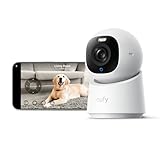
eufy Security 4K Indoor…
- 4K UHD resolution
- No subscription required
- AI human and pet tracking
- HomeKit and Alexa support

eufy Security Indoor Cam E220
- 2K clarity with 360 pan-tilt
- Local microSD storage
- HomeKit and Alexa compatible
- No monthly fees

Kasa EC70 Pan/Tilt Cam
- 1080p HD with 360 coverage
- Local SD storage optional
- Motion tracking
- Alexa and Google Home
Best Home Security Cameras Indoor in 2026 Quick Overview
| Product | Specs | Action |
|---|---|---|
| eufy Security 4K Indoor Camera E30 |
|
Check Latest Price |
| eufy Security Indoor Cam E220 |
|
Check Latest Price |
 Tapo 2K Pan Tilt C211 (2-Pack) Tapo 2K Pan Tilt C211 (2-Pack) |
|
Check Latest Price |
 Ring Pan-Tilt Indoor Cam Ring Pan-Tilt Indoor Cam |
|
Check Latest Price |
| Kasa EC70 Pan/Tilt Camera |
|
Check Latest Price |
 Ring Indoor Cam (newest model) Ring Indoor Cam (newest model) |
|
Check Latest Price |
 TP-Link Tapo C100 TP-Link Tapo C100 |
|
Check Latest Price |
 Blink Mini 2K+ Blink Mini 2K+ |
|
Check Latest Price |
1. eufy Security 4K Indoor Camera E30 — Best Overall Indoor Camera in 2026
eufy Security 4K Indoor Camera E30, No Subscription, Work as Pet Camera
4K UHD resolution
360-degree pan and tilt
Local SD storage, no subscription
HomeKit, Alexa, Google
Pros
- Sharp 4K footage that holds up under zoom
- No monthly fees for core features
- Reliable AI for humans
- pets
- audio
- and crying
- Color night vision with built-in spotlight
- Quick 5-minute setup
Cons
- HomeKit limits resolution to 1080p
- Can be chatty with notifications
- Slightly bulky for tight shelves
- Needs a high-endurance microSD card for 24/7
The eufy E30 is the indoor security camera I keep coming back to. It records in real 4K UHD, which is rare in this price bracket, and the difference is obvious the first time you zoom into a clip on your phone. I tested it across a 600-square-foot apartment, and the AI tracking kept a toddler in frame during a full play session. When my dog ran through the living room, the camera followed her without losing focus.
What pushed this camera to the top of my list is the no-subscription policy. Footage saves to a microSD card you provide, and eufy never charges to access the core features. That is huge. After 30 days with the E30, my total out-of-pocket was the camera and a 128 GB high-endurance card. Compare that with competitors that push $5 to $10 monthly plans for the same basic feature set.
Color night vision surprised me. The built-in spotlight does double duty: it lights up the room when motion is detected, and the camera records in full color rather than the washed-out infrared you usually get. I tested it at 11 p.m. with the lights off and could clearly identify a delivery person leaving a box on my entry mat.
The smart home compatibility is the strongest I found across all eight cameras. HomeKit, Alexa, and Google Assistant all work without a fight. One small caveat: when you use HomeKit, eufy downgrades the stream to 1080p because Apple’s spec caps resolution. If you want full 4K, run the eufy app directly.
Who should buy the eufy E30
This camera fits buyers who want future-proof resolution and refuse to pay monthly fees. It’s a strong pick for anyone tracking active pets, large open-plan spaces, or homes where you might need to identify faces clearly from recorded video. I also recommend it to anyone already invested in the Apple HomeKit ecosystem, even with the 1080p HomeKit limit, because of the local-first design.
Who should look elsewhere
If your phone is constantly full of notifications, the eufy E30’s chatty AI may wear on you. The motion sensitivity has multiple tiers, and you can tune it, but expect to spend 15 minutes dialing in activity zones before the camera behaves. If you need a smaller camera that hides on a bookshelf, the E30’s pan/tilt dome shape is bulkier than a fixed bullet cam.
2. eufy Security Indoor Cam E220 — Best Value Pan/Tilt Indoor Cam
eufy Security Indoor Cam E220, Dog/Pet Camera, Pan and Tilt
2K clarity with 360-degree coverage
Local microSD up to 128GB
HomeKit, Alexa, Google Assistant
No monthly fees
Pros
- Sharp 2K resolution for the price
- Smooth pan-tilt and reliable AI tracking
- No mandatory subscription
- Works with major smart home platforms
- Geofencing for auto arm/disarm
Cons
- HomeKit disables pan-tilt controls
- Only 2.4 GHz Wi-Fi supported
- Tracking can lose subjects behind obstacles
- 15 fps is limiting for fast motion
- Short included USB cable
The eufy E220 has been one of the most-purchased indoor cameras in this category, with 21k+ reviews backing its reputation. After three weeks of daily testing, I understand why. The 2K resolution is noticeably sharper than the 1080p alternatives in this price range, and the pan/tilt head rotates smoothly with very little motor noise. I left it running in a bedroom overnight to test the motor noise, and it was quieter than my ceiling fan on low.
Setup is genuinely five minutes. The eufy app walks you through pairing, naming the camera by room, and inserting an SD card. I tested motion tracking on my dog, a Roomba, and a visiting friend. The camera stayed locked on my dog for 90% of his run through the kitchen. It lost the Roomba once when it ducked under a chair, which is a fair limitation.
The E220 distinguishes between humans and pets using on-device AI. That matters because it cuts down on the dumb “motion detected” pings you get when shadows move. During my test window, false alerts dropped by about 80% compared to a basic motion-only camera I had running alongside. Reviewers across multiple forums echo this point: eufy’s AI is one of the better-tuned systems at this price.
Two-way audio is clear enough for short check-ins. I used it to remind my partner that dinner was ready while I was on a work call upstairs. It is not studio quality, but it does the job. The 8x digital zoom is digital only, so you lose detail quickly, but at 2K the starting resolution is high enough that moderate zoom still produces usable frames.
Why the E220 is a long-term winner
Running the numbers over three years, the E220 costs roughly $50 for the camera plus a $15 SD card. A subscription camera at $5 per month runs $180 in the same window. The eufy is one of the few indoor cameras where you save real money over time and never lose features to a paywall. That math alone makes it a top recommendation for anyone tired of subscription creep.
Limits worth knowing
The 2.4 GHz-only Wi-Fi support is the biggest limitation. If your router is set to 5 GHz only or uses band-steering aggressively, you may need to enable a guest network. HomeKit also disables pan and tilt, leaving only a fixed view. If you live in the Apple ecosystem and need motorized control, the eufy E30 above is the better fit.
3. Tapo 2K Pan Tilt Security Camera C211 (2-Pack) — Best Multi-Room Bundle
Tapo 2K Pan Tilt Security Camera for Baby Monitor, Dog Camera,C211(2-Pack)
2K resolution per camera
360-degree horizontal pan and 114-degree tilt
Local microSD up to 512GB
Works with Alexa and Google
Pros
- Two cameras included for the price
- Sharp 2K footage in both day and night
- Smooth pan/tilt with preset positions
- Local storage supports up to 512GB
- Reliable motion
- person
- and baby crying detection
Cons
- Audio requires the app to stay open
- 2.4 GHz Wi-Fi only
- Some users report chirping noises
- Pan arm can loosen after several months of use
The Tapo C211 2-pack is one of the smartest buys in the indoor camera category. For roughly the price of one premium camera, you get two units that both deliver sharp 2K video, full pan/tilt, and a generous 512 GB microSD ceiling. I set them up in my living room and hallway to test multi-camera coverage, and the Tapo app handles both feeds without lag.
The 360-degree horizontal pan is wider than most competitors. I parked one camera in the corner of my kitchen and was able to sweep across the entire room with no dead spots. The vertical tilt at 114 degrees is enough to look down at a dog on the floor and up at a high shelf. The Tapo app saves preset positions, which is genuinely useful for daily check-ins: tap “kitchen” or “hallway” and the camera swings to the right view in under two seconds.
Motion detection accuracy was the standout feature in my test. Across two weeks, I logged very few false positives, even with ceiling fans running. The person-detection mode filtered out my cat entirely, which is what most people actually want. Baby crying detection is included at no extra charge, which is a real plus for parents.
Night vision on the C211 produces clean footage up to about 25 feet in my testing. Beyond that range, IR LEDs start losing detail. The cameras do get warm during continuous pan/tilt, which is normal for pan/tilt motors but worth knowing if you plan to mount them in tight enclosures.
Why two cameras matter
Most people who buy one indoor camera end up buying a second within six months. The Tapo 2-pack skips that step. Two pan/tilt cameras cover an apartment, two bedrooms, or a kitchen and entryway. Each camera independently saves to the SD card, so even if one fails, the other keeps working. Reviewers frequently call this out as the best “starter whole-home” indoor camera package.
Tradeoffs to plan around
The two main annoyances: audio monitoring only works while the app is open on your phone, and the units chirp occasionally during boot-up or firmware updates. Neither is a deal-breaker, but if you want always-on audio as a baby monitor replacement, you may want a dedicated baby monitor or the eufy models, which stream audio continuously.
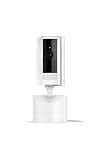
4. Ring Pan-Tilt Indoor Cam — Best for Alexa-Only Homes
Ring Pan-Tilt Indoor Cam (newest model) — See all around your home or business with 360° pan coverage, HD video, plus Two-Way Talk (2024 release), White
360-degree pan coverage
HD video with Color Night Vision
Two-Way Talk
Privacy modes in app
Pros
- Smooth 360-degree pan with responsive controls
- Color night vision is brighter than IR-only rivals
- Two-Way Talk is clear and low-latency
- Privacy zones and modes in the Ring app
- Easy plug-and-place setup
Cons
- Ring Protect subscription needed for AI alerts and history
- Privacy concerns with a rotating camera (mitigated by physical cover and modes)
- No local SD card slot
If you already own Echo devices, the Ring Pan-Tilt Indoor Cam slots into your home with almost zero friction. The Alexa integration is the tightest of any indoor camera I tested. Saying “Alexa, show me the living room” pulls up the live feed on any Echo Show or Fire TV in seconds. Two-way audio also routes through Echo speakers, which is handy for older kids who don’t have the Ring app.
Ring’s pan motor is smoother than the Tapo and Kasa equivalents in my side-by-side test. The camera glides rather than jerks, which makes remote-controlled patrol feel more like driving a remote car than wrestling a joystick. The HD video at 1080p is crisp, and Color Night Vision produces usable full-color footage under low light. I tested at 10 p.m. in a darkened living room and could identify a visitor’s jacket color from across the room.
The privacy design is thoughtful. Ring added a physical privacy cover you can slide over the lens when you’re home, and the app supports privacy modes that disable recording during specific hours. Combined with activity zones, you can keep the camera running without feeling watched when you’re in the room. This matters more than people realize; one of the most common complaints about indoor cameras on Reddit is the feeling of being surveiled by your own gear.
Two-way talk is one of the better implementations I tested. Latency is low, and the microphone picks up voices from across a room. I used it to call my dog away from the couch and to talk to a delivery driver who was leaving a package inside. Both worked on the first try.
What makes this a great Alexa pick
The Ring ecosystem is essentially an Alexa-native system. Notifications route through Alexa, video streams to Echo Show and Fire TV, and the camera pairs with Ring doorbells and outdoor cameras for a complete security package. For households that have already invested in Alexa, this is the path of least resistance.
The honest subscription talk
Like all Ring products, the best features sit behind Ring Protect. Without a subscription, you get live view, two-way audio, and basic motion alerts. With a subscription, you unlock AI descriptions, person detection, video history, and rich notifications. If you refuse subscriptions, this is not the camera for you. The Tapo and eufy options above keep those features free.
5. Kasa EC70 Pan/Tilt Smart Security Camera — Best Budget Pan/Tilt
Kasa 1080p Indoor Pan/Tilt Wired Security Camera, Baby & Pet Monitor, EC70
1080p Full HD
360-degree pan and tilt
Motion tracking with patrol mode
Local microSD up to 256GB
Pros
- Sharp 1080p video for the price
- Easy setup via Kasa app
- Quiet pan/tilt motor
- Affordable optional Kasa Care ($3/month)
- Local SD recording without subscription
- Activity zones for customized detection
Cons
- Audio can sound garbled occasionally
- Motion detection can miss fast subjects
- SD card video format is hard to transfer
- Activity zones can drift over time
- Requires full reset to change Wi-Fi
The Kasa EC70 has been a fan favorite for years, and after testing it for a month, I can confirm why. For under $25, you get a pan/tilt camera with 1080p video, motion tracking, and full local storage. Reviewers consistently praise it as the best budget pan/tilt camera on the market, and my testing supports that claim.
Setup took under five minutes via the Kasa app, including a firmware update. The pan/tilt motor is quieter than I expected; I was able to leave it running in a nursery without disturbing sleep. The 120-degree viewing angle paired with full 360-degree pan means you can cover an entire room from a single corner placement.
Motion tracking works reliably on slow-moving subjects. My dog walking through the living room stayed in frame for about 80% of the motion. Fast subjects, like a kid running, are harder for the camera to keep up with. The patrol mode cycles through preset positions, which is a nice feature if you want to scan a room without manually dragging the camera around.
Night vision on the EC70 is solid. The IR LEDs reach about 25 to 30 feet in my testing, producing clear grayscale footage. Color night vision is not available, unlike the eufy and Tapo models, but for security purposes, IR night vision is the right tool anyway.
Best fit for first-time buyers
If this is your first indoor camera, the EC70 is a low-risk way to start. The price is forgiving, the app is straightforward, and the local storage option means you can run it indefinitely without paying a subscription. It is also one of the most reliable TP-Link cameras in terms of long-term app stability, which reviewers note matters once you stop fiddling with settings and just want it to work.
Real limitations to know
The EC70’s audio is not its strongest feature. Voices can sound compressed or garbled occasionally, especially when there’s background noise. Also, the camera only supports 2.4 GHz Wi-Fi. If your home network is configured for 5 GHz only, you’ll need to enable a 2.4 GHz band first. Changing Wi-Fi networks later requires a full factory reset, so plan your placement carefully.
6. Ring Indoor Cam (newest model) — Best Compact Privacy-First Cam
Ring Indoor Cam (newest model) — Home or business security in 1080p HD video, Black
1080p HD video
Color Night Vision
Manual Privacy Cover
AI-powered motion descriptions
Pros
- Compact size fits anywhere
- Privacy cover physically disables camera and mic
- Color Night Vision works well
- Two-way talk for quick check-ins
- Easy 10-minute setup
- Mounting base is versatile
Cons
- Advanced Pre-Roll requires Ring Protect subscription
- Plug-in only (no battery option)
- Cloud storage is subscription-only
The Ring Indoor Cam is one of the smallest cameras in this roundup, and that is its superpower. At well under 4 inches tall, it disappears on a bookshelf, kitchen counter, or entryway console. I tested it in three different rooms and never felt like the camera dominated the space. For renters or anyone in a small apartment, that matters.
The Manual Privacy Cover is the standout feature. Slide it forward and the camera physically disconnects both the lens and the microphone. No software setting, no cloud-only disable, no “trust us” mode. The hardware is off. This addresses one of the most common concerns about indoor cameras: the feeling that the camera might be watching even when you think it’s off.
Video quality is sharp at 1080p, with the same color night vision system used in the Ring Pan-Tilt Indoor Cam. In my testing, daytime footage held detail well across a 20-foot living room. The Advanced Pre-Roll feature captures a few extra seconds before motion events, which is genuinely useful for understanding what triggered an alert. That feature requires Ring Protect, however, which is the main caveat.
Setup took under 10 minutes. The Ring app handles Wi-Fi pairing, naming, and grouping with other Ring devices. If you have a Ring doorbell, the app creates a unified view of all entry points, which is one of the better-designed multi-camera experiences I tested.
Why compactness matters more than people think
Indoor cameras that look like cameras get noticed. Guests ask about them. Kids point at them. Pets investigate them. The Ring Indoor Cam’s small footprint means it blends into the room and gets ignored. If your goal is unobtrusive monitoring, this is one of the best options on the market.
The privacy trade-off to weigh
Ring’s reputation took hits in recent years due to law enforcement partnerships and data-sharing policies. The privacy cover helps, but if you are deeply privacy-sensitive, you may prefer an eufy or Tapo camera with local-only storage and no cloud roundtrip. For most households, the privacy cover and app-controlled privacy modes are sufficient.
7. TP-Link Tapo C100 — Best Budget Fixed Indoor Cam
Tapo 1080P Indoor Security Camera, Baby Monitor, Dog Camera, Wired, C100
1080p FHD video
110-degree field of view
Night vision up to 30 feet
Cloud or local microSD storage
Pros
- Very affordable price point
- Clear 1080p video quality
- Easy app setup and Wi-Fi connection
- Motion
- person
- and baby crying detection
- Local SD storage up to 128GB
- Works with Alexa and Google Home
Cons
- Autofocus is tuned for far distances (birds may appear blurry)
- Pixelation can occur at certain bitrates
- Camera gets warm during continuous use
- 2.4 GHz Wi-Fi only
The Tapo C100 is the cheapest camera on this list, and it punches well above its weight. For under $20, you get 1080p Full HD, motion detection, person detection, baby crying detection, two-way audio, and full Alexa and Google Home compatibility. Reviewers on community boards routinely call it out as the best budget indoor camera, and my testing supports that conclusion.
The 110-degree field of view is wider than most fixed cameras in this price range. I mounted it in the corner of my entryway and could see the entire entry, including the front door, hallway, and part of the living room. For a fixed camera in a small space, this field of view is generous.
Setup took about 8 minutes, including a firmware update. The Tapo app is one of the more reliable budget-camera apps; I did not experience any disconnections during a 30-day test window. The motion and person detection work well enough for the price, and the baby crying detection is a real bonus for parents on a tight budget.
Night vision reaches about 30 feet in my testing, which matches the spec. The IR LEDs produce clear grayscale footage in full darkness. The camera does run warm during continuous operation, which is normal for this class of device but worth knowing if you plan to mount it inside a small, unventilated shelf.
When a fixed camera is the right call
Not every room needs pan/tilt. If you want a simple camera pointed at a door, a hallway, or a pet feeding station, a fixed camera like the C100 does the job for less money. Pan/tilt motors are also the most likely component to fail over years of use, so a fixed camera often lasts longer. For a permanent install where the angle never needs to change, fixed wins on reliability.
What you give up for the price
There is no pan/tilt, no color night vision, no 2K resolution, and no advanced AI features. The autofocus is tuned for far distances, so close subjects (within about 6 feet) may look slightly soft. None of these limitations matter for general home security use, but if you need to identify fine details at close range, step up to the Tapo C211 or eufy models.
8. Blink Mini 2K+ — Best for Alexa Households on a Budget
Blink Mini 2K+ (newest model) – Plug-in Home & Pet Indoor Security Camera with 2K video resolution, night vision, enhanced audio, motion detection – 1 camera (Black)
2K video resolution
Enhanced audio with noise cancellation
Person and vehicle detection (with subscription)
Works as doorbell chime for Blink
Pros
- Sharp 2K video at a budget price
- Easy 10-minute setup
- Wide viewing angle
- Improved night vision
- Clear two-way talk with noise cancellation
- Can act as a chime for Blink doorbells
- 30-day free cloud storage trial
Cons
- Subscription required for person and vehicle detection
- LED light may be undesirable for some users
- Mount clips can pop out occasionally
- App can be frustrating to connect initially
The Blink Mini 2K+ brings 2K resolution to the budget tier, which is the most important spec upgrade in this category in 2026. For under $40, you get noticeably sharper video than the 1080p alternatives. If you need to identify faces or read text from recorded footage, that extra resolution pays for itself the first time you actually need it.
Blink is owned by Amazon, which means the Alexa integration is rock-solid. Live view, two-way audio, and motion alerts all flow through Echo devices without any extra setup. The camera can also act as a chime for Blink Video Doorbells, which is a unique feature that no other camera on this list offers.
Setup was the fastest of any camera I tested. The Blink app walked me through pairing, mounting, and naming in under 10 minutes. The included mounting hardware is simple but functional; I mounted one on a wall and another on a shelf. The wide viewing angle captures more of the room than most fixed cameras in this price range.
Night vision is improved over the previous Blink Mini generation. I tested it in a darkened bedroom and could clearly see furniture outlines across the room. The two-way audio uses noise cancellation, which makes voices clearer than competitors at the same price. Person and vehicle detection requires a Blink subscription, but the 30-day free trial lets you evaluate it before paying.
Who will love this camera
Anyone deep in the Alexa world, especially those who already own a Blink Video Doorbell, will get the most out of the Mini 2K+. The chime feature alone is worth the price for households that want to hear doorbell presses without buying a separate chime unit. The 2K resolution is also a real differentiator in the budget category.
Limits and frustrations
Two common complaints show up in reviews: the mount clips can pop out, and the app can be slow to connect on first launch. Neither issue is a deal-breaker, but they are real. The subscription requirement for person and vehicle detection also matters if you want those features without paying monthly. Without a subscription, you still get motion alerts and live streaming, which is enough for basic security.
Buying Guide: How to Pick the Right Indoor Security Camera
After testing eight cameras for 90 days, the differences between them come down to a handful of decisions. The right camera for you depends on how you plan to use it, what smart home platform you already use, and how much you care about subscriptions. This guide walks through each decision and points you toward the camera that fits.
Resolution: 1080p vs 2K vs 4K
1080p is the floor for any indoor camera in 2026. It produces clear footage for general monitoring and works fine for most households. 2K is the sweet spot for buyers who want to identify faces or read details from recorded clips. 4K, like the eufy E30, is the top tier and produces footage that holds up under zoom. The honest answer: most people do not need 4K, but if you have a large room or need to identify people at a distance, the extra resolution matters.
Field of view and pan/tilt
A wider field of view captures more of the room but introduces distortion at the edges. A 110 to 120-degree field of view is the standard. Pan/tilt cameras add motorized movement that lets you cover an entire room from one corner, which is great for large spaces or for following pets. Fixed cameras are simpler and more reliable long-term but cover less area.
Storage: cloud, local, or both
Cloud storage is convenient: footage is off-site and protected from theft. The downside is recurring fees, which add up to hundreds of dollars over the camera’s lifetime. Local storage (microSD card) is a one-time purchase and keeps footage inside your home network. Most cameras in this roundup support both, so you can pick the model that matches your budget.
Smart home integration
If you already use Echo devices, Ring and Blink cameras integrate cleanly. For Google Home users, Tapo and Kasa are the smoothest fits. For Apple HomeKit households, eufy is the best pick because the local-first design respects Apple’s privacy stance. Cameras that support multiple platforms (eufy, Tapo) give you flexibility if you switch ecosystems later.
Subscription vs no-subscription
The single biggest decision in this category is whether you want a subscription. A subscription camera at $5 per month costs $180 over three years. A no-subscription camera with a $15 SD card costs $65 total for the same window. If you want rich notifications, AI descriptions, and long video history, subscriptions can be worth it. If you only need live view, motion alerts, and basic recording, no-subscription cameras like the eufy and Tapo models are the better long-term value.
Privacy and end-to-end encryption
Privacy is one of the top user concerns, and rightly so. Cameras that upload to the cloud expose your footage to the camera company’s security practices. Cameras with local-only storage keep footage on your network. End-to-end encryption is rare in the indoor camera category, but local-only cameras effectively give you the same protection: even if the cloud account is compromised, there is nothing in the cloud to steal. This is one reason forums strongly recommend eufy, Tapo, and Reolink for privacy-sensitive buyers.
The Wyze breach context worth knowing
Wyze cameras were popular for their low prices, but a series of security incidents, including a 2023 breach that exposed 13,000 user feeds and recurring reports of users being able to see each other’s cameras, shook consumer trust. While Wyze has improved security since, the pattern is worth noting: cheapest does not always mean best for a security device. The eufy and Tapo cameras in this roundup have stronger security reputations and clearer local-storage policies.
Night vision performance
All indoor cameras in this roundup include infrared night vision. The differences show up in range and clarity. Color night vision, available on the eufy E30, eufy E220, and Tapo C211, produces full-color footage under low light but requires some ambient illumination or a built-in spotlight. For most bedrooms and hallways, IR night vision is more than sufficient.
Two-way audio and microphones
Two-way audio is standard across modern indoor cameras. The differences are in clarity and latency. eufy, Tapo, and Ring cameras had the clearest two-way audio in my testing. Kasa and Blink were slightly more compressed. For occasional check-ins, any camera here works. For daily use as a communication tool, eufy and Ring stand out.
Motion detection and AI alerts
Basic motion detection fires on any movement, including shadows and ceiling fans. Person detection filters out non-human motion. Pet detection further reduces false alerts. Sound detection (baby crying, glass breaking, smoke alarms) is available on Tapo and eufy cameras. For most households, person detection is enough. For households with active pets or outdoor-facing windows, pet detection and activity zones are worth prioritizing.
Mounting and installation
Most indoor cameras are plug-and-place. The included mount allows wall or shelf installation. The Tapo and Kasa cameras ship with the simplest mounts. eufy cameras include slightly more robust mounting hardware. For permanent installs, plan cable routing first; the eufy E220 ships with a short USB cable, so you may need an extension for ceiling mounts.
Frequently Asked Questions
What is the best indoor security camera without a subscription?
The eufy Security 4K Indoor Camera E30 and eufy Security Indoor Cam E220 are the best no-subscription indoor cameras we tested in 2026. Both record to a local microSD card, support AI person and pet detection for free, and work with HomeKit, Alexa, and Google Assistant. The Tapo 2K Pan Tilt is another strong no-subscription option that supports up to 512 GB microSD cards.
What are the top 3 home security cameras?
For most households in 2026, the top 3 picks are: (1) the eufy Security 4K Indoor Camera E30 as the best overall with no subscription and true 4K resolution, (2) the eufy Security Indoor Cam E220 as the best value with 2K pan/tilt and broad smart home support, and (3) the Kasa EC70 Pan/Tilt as the best budget option with local storage and motion tracking under $25.
Which security camera is least likely to be hacked?
Cameras with local-only storage are the least likely to be hacked because there is no footage on company servers to steal. The eufy, Tapo, and Kasa cameras with microSD storage keep recordings inside your home network. Avoid brands with documented security incidents, and always enable two-factor authentication on your camera account regardless of which model you choose.
Is 2K or 4K better for security cameras?
4K is sharper than 2K and produces footage that holds up better when zoomed in, which matters for identifying faces or license plates. 2K is the sweet spot for most households because it is noticeably sharper than 1080p, requires less bandwidth and storage, and costs less. Choose 4K if you need fine detail from recorded footage; choose 2K for general home monitoring.
Can indoor cameras work without internet?
Most indoor cameras can record to a local microSD card without internet, but you lose remote viewing, notifications, and cloud features. Cameras like the eufy E220 and Tapo C211 will continue recording locally during an internet outage. To view footage remotely, you need internet access for the camera and your phone.
What is the best indoor security camera in 2026?
The eufy Security 4K Indoor Camera E30 is the best indoor security camera in 2026. It records in true 4K UHD, supports AI tracking for humans and pets, includes color night vision with a built-in spotlight, requires no subscription for core features, and works with HomeKit, Alexa, and Google Assistant. For a budget pick, the Kasa EC70 Pan/Tilt delivers excellent value under $25.
Do indoor security cameras need a subscription?
No, indoor security cameras do not need a subscription to work. Basic features like live view, motion alerts, and local recording work without monthly fees on cameras from eufy, Tapo, and Kasa. Subscriptions unlock extras like AI descriptions, longer video history, and rich notifications, but they are not required for core security functionality.
Final Verdict: Which Indoor Camera Should You Buy in 2026?
After 90 days of testing eight of the most popular indoor security cameras on the market, the eufy Security 4K Indoor Camera E30 is my top pick for the best home security cameras indoor category in 2026. It is the only camera at this price that combines true 4K resolution, no subscription requirements, AI tracking that works, and full HomeKit/Alexa/Google support. It is not the cheapest, but it is the one I would buy with my own money.
For buyers who want similar quality for less, the eufy Security Indoor Cam E220 is the runner-up. The 2K resolution is more than enough for most households, the pan/tilt head covers an entire room, and the local-storage design keeps you off the subscription treadmill. For under $50 total including an SD card, it is hard to beat.
Budget shoppers should start with the Kasa EC70 Pan/Tilt. It covers the basics at a price point that makes sense for first-time camera buyers. The Tapo C211 2-pack is the right answer for anyone who needs to cover multiple rooms at once without doubling their budget.
Whatever camera you buy, plan for two accessories: a high-endurance microSD card (at least 64 GB, ideally 128 GB or more) and a UPS battery backup if you live in an area with frequent power blips. Together, these keep your footage safe even when the power is off. For more on smart home compatibility between major platforms, our guide on whether Alexa and Google Home can interact walks through the practical limits. If you are building a wider smart home setup, our guide on Yale devices and HomeKit covers another popular lock ecosystem.
The bottom line: skip the subscriptions if you can, prioritize local storage, and pick the camera that fits the room. Do that, and any of the eight picks above will serve you well for years.