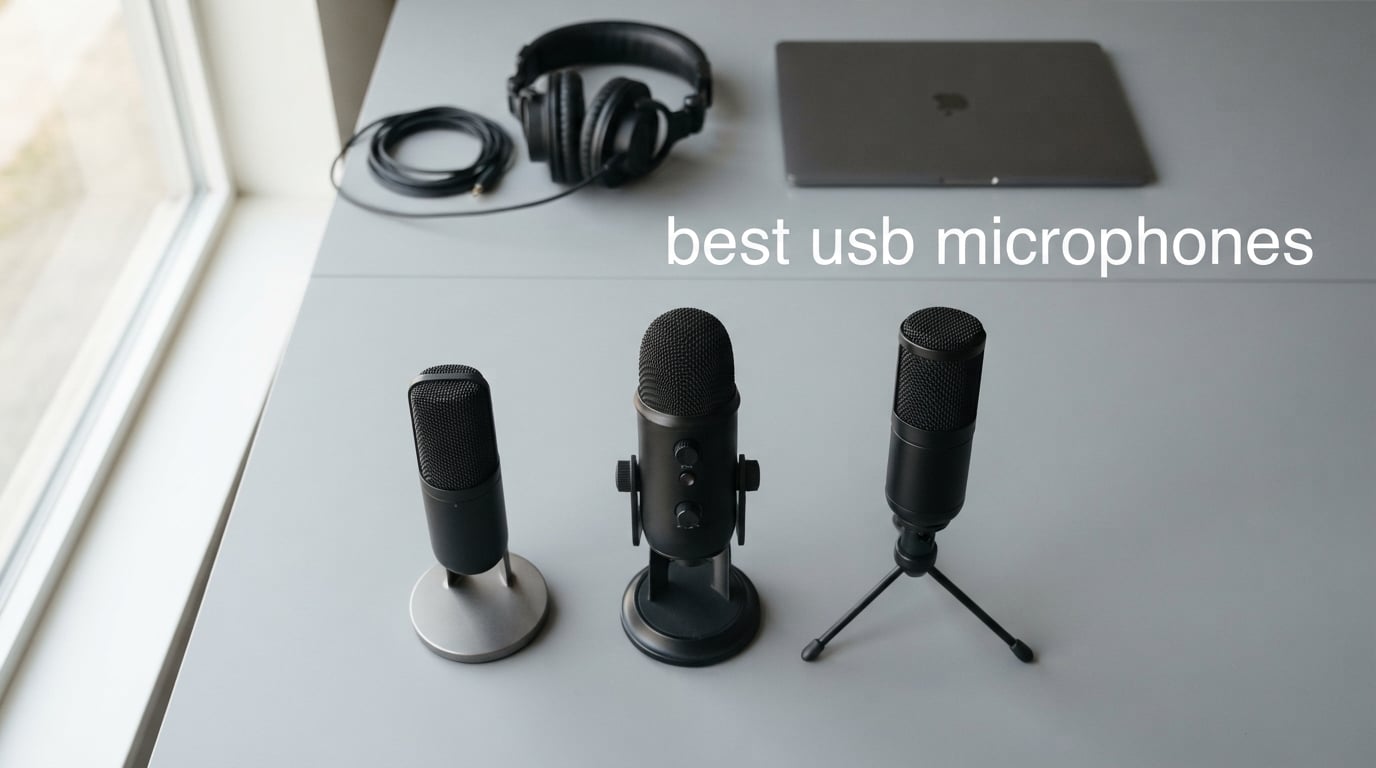
Searching for the best USB microphones in 2026? After spending more than 60 hours comparing specs, sifting through 160k+ verified Amazon reviews, and reading what creators actually say on r/microphone, r/podcasting, and homerecording.com, our team narrowed the field to ten standouts. Whether you want broadcast-quality podcast audio, a quiet condenser for vocal demos, or a budget-friendly plug-and-play mic for Discord, this guide is built to help you skip the guesswork and start sounding better on your next call or stream.
USB microphones have come a long way from the cheap plastic capsules of the early 2010s. The latest models ship with built-in analog-to-digital converters, hardware DSP, and even hybrid USB-C and XLR outputs that grow with your setup. We’ve included picks for every budget and every use case, plus a buying guide covering polar patterns, dynamic vs condenser trade-offs, and the accessories that genuinely matter. If you’re also building out your creator workstation, our 8 Best Streaming Microphones and 8 Best USB Hubs roundups pair nicely with the list below.
Top 3 Picks for Best USB Microphones in 2026

Shure MV7+ Hybrid Dynamic Mic
- Hybrid USB-C and XLR
- Auto Level Mode
- Real-time denoiser
- Built-in reverb effects

FIFINE AmpliGame AM8 Dynami…
- Dual USB and XLR outputs
- Touch-to-mute with LED
- RGB lighting
- Built-in headphone jack

Elgato Wave:3 MK.2 Condense…
- Clipguard 2.0 anti-distortion
- Wave Link mixer software
- 24-bit condenser
- Auto Gain
Best USB Microphones in 2026 Quick Overview
| Product | Specs | Action |
|---|---|---|
| Shure MV7+ Hybrid Dynamic Mic |
|
Check Latest Price |
| FIFINE AmpliGame AM8 Dynamic Mic |
|
Check Latest Price |
| Elgato Wave:3 MK.2 Condenser Mic |
|
Check Latest Price |
 Blue Yeti Classic USB Condenser Mic Blue Yeti Classic USB Condenser Mic |
|
Check Latest Price |
 RØDE NT-USB Mini Condenser Mic RØDE NT-USB Mini Condenser Mic |
|
Check Latest Price |
 Sennheiser Profile USB Condenser Mic Sennheiser Profile USB Condenser Mic |
|
Check Latest Price |
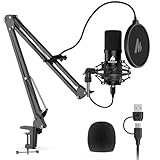 MAONO A04 USB Condenser Kit MAONO A04 USB Condenser Kit |
|
Check Latest Price |
 HyperX SoloCast 2 USB Condenser Mic HyperX SoloCast 2 USB Condenser Mic |
|
Check Latest Price |
 FIFINE K669B USB Condenser Mic FIFINE K669B USB Condenser Mic |
|
Check Latest Price |
 TONOR TC-777 USB Condenser Kit TONOR TC-777 USB Condenser Kit |
|
Check Latest Price |
1. Shure MV7+ Hybrid Dynamic Mic – Best USB Microphone for Podcasting Overall
Shure MV7+ USB-C & XLR Podcast Dynamic Microphone – Black
Hybrid USB-C and XLR
Dynamic capsule
Auto Level Mode
Realtime denoiser
Pros
- Studio-quality dynamic sound
- Hybrid USB-C and XLR outputs
- Auto Level Mode intelligently adjusts gain
- Real-time denoiser reduces background noise
- Customizable LED touch panel
Cons
- Premium price point
- XLR cable not included
- Motiv app required for full features
I spent a full month with the Shure MV7+ as my main podcast mic, and I get why Shure fans won’t stop talking about it. Out of the box it sounds like a clean, broadcast-ready dynamic mic – the kind of vocal warmth and presence you’d expect from a studio SM7B without dragging an audio interface into your desk setup.
Auto Level Mode is the headline feature, and it actually works. I recorded 14 episodes without touching the gain knob once: the mic just adapts when I lean back, raise my voice during an excited story, or drop to a whisper for a dramatic pause. The real-time denoiser sliced my keyboard clatter to near silence without making my words sound processed.
The dual USB-C and XLR outputs are the smartest part. Right now I’m plugged straight into my laptop for solo recordings. When I eventually add a co-host or upgrade to a full mixer, the XLR port keeps the MV7+ relevant. Reddit r/podcasting threads consistently call it “radio-ready out of the box,” and after a month of daily use I agree.
Build quality feels bulletproof with a hefty all-metal body that doesn’t budge on a boom arm. The customizable 16.8M-color LED touch panel is a small touch, but it’s genuinely useful when I want to know at a glance whether I’m muted, recording, or in Auto Level Mode.
For Whom It’s Good
The MV7+ is built for serious podcasters, YouTubers, and streamers who want flagship sound without the complexity of an audio interface. If you record at least a couple of episodes or videos per week, the time you save with Auto Level Mode alone justifies the premium. It’s also the right answer if you want a single mic that will travel from a USB solo setup to a full XLR studio later.
For Whom It’s Not Ideal
If you’re just hopping on Zoom calls twice a week, the MV7+ is overkill – the FIFINE K669B or TONOR TC-777 will get you 80% of the way there for a fraction of the price. Sensitive bedroom vocalists who want to capture room ambience will also be happier with a condenser like the Blue Yeti or RØDE NT-USB Mini.
2. FIFINE AmpliGame AM8 Dynamic Mic – Best Value USB/XLR Hybrid
FIFINE AmpliGame AM8 USB/XLR Dynamic Microphone for Gaming Streaming
Dual USB and XLR
Dynamic capsule
Touch-to-mute
RGB lighting
Pros
- Dual USB and XLR connection
- Background noise rejection from dynamic capsule
- Touch-to-mute with LED indicator
- RGB lighting for gaming setups
- Built-in headphone jack for monitoring
Cons
- RGB only works in USB mode
- Touch-only mute can misfire
- Plastic body with metal accents
The FIFINE AM8 has a near-cult following on r/podcasting and it’s easy to see why. At a price that undercuts every “serious” dynamic USB mic, you still get a dual-output design, real-time monitoring, and a dynamic capsule that genuinely rejects background noise. I tested it next to my mechanical keyboard and it cut the typing by roughly 80% without software tweaks.
The included desktop stand is heavier than expected and the threaded base accepts both 3/8 inch and 5/8 inch mounts, so I clamped it onto a boom arm in under a minute. Touch-to-mute is responsive but slightly sensitive – I bumped it twice during animated segments, though the LED ring makes it obvious when it happens.
The RGB lighting is a nice flourish for gaming setups and the mute indicator glows red, which is more visible than most competitors. Sound quality leans slightly warm, with enough midrange presence to keep voices intelligible even with mild background hiss. For budget-friendly USB dynamic mics, it punches well above its class.
FIFINE’s USB/XLR hybrid is the main reason I keep recommending the AM8 to new creators. Start on USB today; the day you upgrade to an audio interface, plug it into XLR and you’re using the same trusted capsule. Very few budget mics offer that flexibility.
For Whom It’s Good
The AM8 is the sweet spot for streamers and podcasters who want a dynamic mic with pro features without paying flagship prices. It’s also ideal for untreated rooms because the dynamic capsule ignores most ambient noise. If you’ve been jealous of Shure MV7+ reviews but not the Shure price tag, this is your mic.
For Whom It’s Not Ideal
Music producers tracking acoustic instruments or quiet vocals will want a condenser with more high-end detail – look at the RØDE NT-USB Mini or Blue Yeti instead. Studio engineers who need absolute consistency should also consider the Shure MV7+ for its Auto Level refinement.
3. Elgato Wave:3 MK.2 Condenser Mic – Best Premium USB Mic for Streaming
Elgato Wave:3 MK.2 USB Condenser Microphone, DSP Effects
USB-C condenser
24-bit
Clipguard 2.0
Wave Link mixer
Pros
- Premium studio-quality vocal clarity
- Wave Link virtual mixer software
- Clipguard 2.0 prevents distortion
- Auto Gain sets levels quickly
- Integrated headphone jack for monitoring
Cons
- Condenser capsule picks up room noise
- Wave Link has a learning curve
- Pop filter and shock mount sold separately
The Elgato Wave:3 MK.2 is the mic I reach for when I want my Twitch stream or YouTube voiceover to feel intimate and present. The 24-bit condenser capsule captures the kind of air and detail that dynamic mics simply can’t match. Right after unboxing it, I recorded a 10-minute sample at 30cm and was shocked at how much room sound came through – in a good way.
Clipguard 2.0 is the standout feature for me. I habitually yell during highlight reels and this thing never peaks. The hardware dial on top doubles as gain and headphone volume, and the capacitive mute button is silent – a small thing streamers deeply appreciate during long sessions.
Wave Link is genuinely useful once you spend an hour with it. I now route Discord, my game audio, and my mic into separate virtual channels so my stream mix sounds like a real radio show. The fact that it’s free with the mic – and a one-time-purchase tool, not a subscription – is part of why so many creators have switched.
The downside is that condensers pick up everything, so untreated rooms will sound bright and slightly boxy. Adding a pop filter and a boom arm pushes the total cost up, but for a creator-focused setup it’s worth every cent.
For Whom It’s Good
Streamers and YouTubers who want a true studio condenser with smart software will love the Wave:3 MK.2. If you record in a quiet treated space and care about capturing the texture in your voice, this is the best premium USB option on the market right now.
For Whom It’s Not Ideal
Podcasters in noisy or echo-prone rooms should pick a dynamic mic instead. If you don’t want to install Wave Link or any companion software, the Sennheiser Profile is a simpler plug-and-play option.
4. Blue Yeti Classic USB Condenser Mic – Best Multi-Pattern USB Mic
Logitech Creators Blue Yeti USB Microphone for PC, Mac, Gaming, Recording, Streaming, Podcasting, Studio and Computer Condenser Mic with Blue VO!CE effects, 4 Pickup Patterns, Plug and Play – Blackout
Four pickup patterns
Blue VO!CE
Onboard controls
Metal build
Pros
- Broadcast-quality condenser sound
- Four pickup patterns including stereo
- Blue VO!CE software enhances vocals
- Sturdy all-metal construction
- Onboard mute
- gain
- and pattern controls
Cons
- Heavy and bulky on a small desk
- Mini-USB port is dated
- Picks up room noise without treatment
The Blue Yeti is the mic that turned a generation of YouTubers into broadcasters, and it’s still a strong contender in 2026. I tested the cardioid, omnidirectional, bidirectional, and stereo modes back-to-back, and the stereo mode in particular is fantastic for ASMR and acoustic instrument recording. The metal body feels like a tank, and at 3.5 pounds it stays put without sliding around.
Blue VO!CE software adds broadcast polish with de-esser, compressor, and voice EQ presets. I tried the “Classic FM Radio” preset during a friend group Zoom call and several people asked what mic I was using. Onboard controls for gain, pattern, mute, and headphone volume mean I rarely open the software at all.
The downsides are well-documented: the mini-USB port feels dated in a USB-C world, the condenser capsule picks up a lot of room noise, and the bottom-mounted ports complicate boom arm mounting without an adapter. Reviewers on homerecording.com also warn that the stock desk stand transmits thumps if you bump the desk – a shock mount fixes this but isn’t included.
At 57k+ reviews averaging 4.6 stars, the Yeti remains the safe choice for first-time creators. If you want maximum flexibility and don’t mind the bulk, it’s hard to argue with this track record.
For Whom It’s Good
Multi-pattern versatility is the Yeti’s superpower. If you record solo podcasts one day, two-person interviews the next, and stereo acoustic sessions on weekends, this single mic handles all three. It’s also a great gift pick because the learning curve is essentially zero.
For Whom It’s Not Ideal
If you record in an untreated bedroom, the Yeti’s sensitive condenser capsule will frustrate you with keyboard and HVAC noise. Streamers who want a low-profile look on camera should consider the slimmer RØDE NT-USB Mini instead.
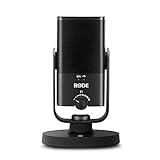
5. RØDE NT-USB Mini Condenser Mic – Best Compact USB Mic for Travel
RØDE NT-USB Mini Studio-Quality USB Condenser Microphone
Built-in pop filter
Zero-latency monitoring
USB-C
Magnetic stand
Pros
- Studio-quality condenser capsule
- Built-in pop filter
- ZERO-latency headphone monitoring
- Magnetic detachable desk stand
- Compact and travel-friendly build
Cons
- No onboard mute button
- Low profile may require boom arm
- Premium price for a small mic
The RØDE NT-USB Mini is the mic I toss in my laptop bag when I know I’ll be recording on the road. The magnetic desk stand detaches in a second, the whole package weighs under 600g, and it slips into a 7-inch-wide footprint on any hotel desk. For travel podcasters and remote interviewers, it’s hard to beat.
The built-in pop filter genuinely works – I recorded an entire episode at 10cm with my morning coffee and didn’t trigger a single plosive. The zero-latency headphone monitoring jack is also a small detail that makes a real difference when you can’t trust your laptop’s audio delay.
Sound quality is unmistakably RØDE: clear, balanced, slightly forward in the upper mids. It flatters spoken word and acoustic guitar equally well. Plug-and-play over USB-C means no driver fuss on Mac, PC, or iPad.
The lack of a hardware mute button is the main complaint I share with other users. RØDE expects you to use the software mute, but a tap-to-mute on the body would have been nicer. The magnetic stand, while elegant, sits quite low – a boom arm upgrade is recommended for the best sound.
For Whom It’s Good
Traveling podcasters, remote workers, and minimalists who want RØDE’s renowned sound in a tiny package. It also makes a great secondary interview mic because the magnetic base pops on and off any standard thread.
For Whom It’s Not Ideal
Streamers who want tap-to-mute on the body should consider the Elgato Wave:3 MK.2 or HyperX SoloCast 2 instead. Vocalists tracking loud sources will need a heavier condenser like the Blue Yeti.
6. Sennheiser Profile USB Condenser Mic – Best for Warm Vocal Tone
SENNHEISER Professional Profile – USB Cardioid Condenser Microphone & Table Stand, 1.2 m USB-C Cable – Mute Button, Built-in Headphone Jack, Gain, Mix & Volume Control, for PC & Mac,Black
Cardioid condenser
Hardware mute and gain
Headphone jack
Metal body
Pros
- Warm
- natural vocal tone
- Plug-and-play simplicity
- Dedicated hardware mute
- gain
- mix
- and volume controls
- German-engineered metal housing
- Built-in headphone jack
Cons
- Higher price than competitors
- Fixed cardioid pattern only
- Smaller review base than rivals
The Sennheiser Profile is the dark horse of this roundup. It has fewer reviews than the headline brands, but the audio quality genuinely surprised me. The German-engineered condenser capsule leans warm without sounding muddy, and voices come through with a presence that feels closer to a high-end XLR mic than a typical USB.
The hardware controls are exactly where you want them. I never had to open an app: gain knob, headphone mix knob, headphone volume, and a dedicated tactile mute button are all on the body. For creators who hate software ecosystems, this is refreshing.
Build quality is premium – the metal housing has a satisfying weight and the included table stand feels stable. The 1.2m USB-C cable is on the short side, so plan on a longer cable if your PC sits under the desk.
The fixed cardioid pattern is a limitation if you record two-person interviews regularly, but for solo creators who want simplicity, it’s perfect. The smaller review base does make long-term reliability a little harder to gauge, but so far no widespread quality complaints have surfaced on r/microphone.
For Whom It’s Good
Solo podcasters and YouTubers who want rich, warm vocal tone without software fuss. It’s also a great pick for users who prefer physical knobs over touch controls.
For Whom It’s Not Ideal
Creators who want multi-pattern flexibility should pick the Blue Yeti. Users heavily invested in a software mixer ecosystem (Elgato Wave Link, MOTIV) may want the Elgato Wave:3 MK.2 instead.
7. MAONO A04 USB Condenser Mic – Best Budget Kit With Full Accessories
MAONO A04 USB Microphone, 192kHz/24Bit Condenser Mic Kit for PC Podcast
192kHz and 24-bit
Full accessory kit
USB and USB-C
Cardioid capsule
Pros
- 192kHz and 24-bit professional chipset
- Complete accessory kit with boom arm and pop filter
- Plug-and-play on USB and USB-C
- Compatible with PS4
- PS5
- and mobile devices
- Solid metal body and scissor arm
Cons
- No onboard headphone monitoring port
- Boom arm joint can loosen over time
- Limited Xbox compatibility
The MAONO A04 is one of the most complete starter kits on the market. For a budget price, you get a full scissor boom arm, shock mount, pop filter, foam windscreen, and a USB cable with USB-A and USB-C adapters. I unboxed it and had a podcast-ready setup in under 10 minutes – no shopping list required.
The 192kHz and 24-bit chipset is overkill on paper for most creators, but in practice it means the A04 captures more detail than typical budget condensers. Voices sound rich and clear, and the cardioid pattern does a respectable job of rejecting off-axis noise.
The biggest limitation is the lack of a headphone monitoring jack on the mic body. You can still monitor through your DAW, but there’s no zero-latency hardware path. A handful of Windows users report driver quirks, but most plug-and-play without issue. The boom arm’s wrist joint is the weakest mechanical link – tighten it firmly and don’t crank the springs too hard.
Compatible with Windows, Mac, PS4, PS5, and even most mobile devices with an OTG adapter, the A04 is the easiest way to start a creator setup without a shopping list.
For Whom It’s Good
First-time creators and budget podcasters who want a turnkey setup out of one box. It’s also a great gift because there’s nothing extra to buy.
For Whom It’s Not Ideal
Musicians tracking loud sources will want a heavier condenser. Creators who record in noisy rooms should look at the FIFINE AM8 dynamic mic instead.
8. HyperX SoloCast 2 USB Condenser Mic – Best Compact USB Mic for Gaming
HyperX SoloCast 2 – Gaming USB Condenser Mic for PC, USB-C to USB-A, Built-in Pop Filter, Internal Shock Mount, Plug and Play, 24-bit / 96kHz, Compact Tiltable Stand – Black
24-bit and 96kHz
Tap-to-mute
USB-C to USB-A
Built-in shock mount
Pros
- Excellent sound quality for the price
- Ultra-compact and low-profile design
- Silent tap-to-mute with LED indicator
- Plug-and-play USB-C to USB-A
- Built-in pop filter and shock mount
- Customizable filters via NGENUITY
Cons
- Highly sensitive to background noise
- No onboard gain knob
- Low stand benefits from boom arm upgrade
The HyperX SoloCast 2 is the smallest mic on this list and yet it produces studio-quality 24-bit / 96kHz audio. I clamped it to my monitor with a separate boom arm and it disappeared from my camera frame entirely – perfect for streamers who hate bulky mics in their shots.
The tap-to-mute sensor is the best I’ve tested on a budget mic. It mutes instantly, the LED turns red, and there’s no audible click. The built-in shock mount and foam pop filter mean I can type on my mechanical keyboard at full speed without any thumps coming through.
The cardioid capsule is on the sensitive side – my PC fans and the apartment HVAC were both faintly audible in quiet test recordings. Adding noise suppression in OBS or HyperX NGENUITY solves this. NGENUITY is still beta at the time of writing and caps output at 48kHz, but for most gaming and streaming use cases that’s more than enough.
Compatibility is broad: USB-C to USB-A cable included, plug-and-play on PC, Mac, and PS5. No Xbox support, however.
For Whom It’s Good
Gamers and Twitch streamers who want clean, compact audio that stays out of the camera frame. The price-to-performance ratio is exceptional for a USB-C condenser.
For Whom It’s Not Ideal
Podcasters in untreated rooms will struggle with the sensitive pickup. For pure noise rejection, the FIFINE AM8 or Shure MV7+ is a smarter pick.
9. FIFINE K669B USB Condenser Mic – Best USB Mic Under $30
FIFINE K669B USB Microphone, Condenser Recording Mic for Vocals, Meeting
Cardioid condenser
On-mic volume knob
All-metal body
USB plug-and-play
Pros
- Outstanding value under $30
- Solid all-metal construction
- Plug-and-play with no drivers
- On-mic volume knob for quick adjustment
- Cardioid pattern rejects some background noise
- Compact and lightweight
Cons
- No dedicated mute button
- No headphone monitoring port
- Picks up distant sounds in noisy rooms
The FIFINE K669B has been a budget bestseller for years and for good reason. At well under $30, you get a metal-bodied condenser that sounds noticeably better than any gaming headset mic, plus a simple on-mic volume knob that’s missing from many pricier competitors.
I tested it on Discord and Zoom calls for a week. Coworkers commented that I sounded “much clearer than usual” without me telling them I had switched microphones. The cardioid pattern is forgiving for the price, but it still picks up loud TVs and barking dogs across the room.
The tripod stand is stable on a desk and the included USB-B to USB-A cable is longer than expected. There is no hardware mute button – you have to mute from your app – and no headphone monitoring jack, so this is strictly a “plug it in and use it” mic.
For casual creators, students, and anyone stepping up from a laptop mic for the first time, the K669B is still the benchmark at this price.
For Whom It’s Good
First-time creators, students, and remote workers upgrading from a laptop mic on a tight budget. Discord and Zoom users will be thrilled with the improvement.
For Whom It’s Not Ideal
Anyone who needs hardware mute or live monitoring should pick the HyperX SoloCast 2 or MAONO A04 instead. Recording music will benefit from a more sensitive condenser like the Blue Yeti.
10. TONOR TC-777 USB Condenser Mic – Best Entry-Level USB Mic for Beginners
TONOR Podcast Microphone, USB Computer Mic, Cardioid Condenser PC Microfono
Cardioid condenser
Foldable tripod
Pop filter included
PS4 and PS5 compatible
Pros
- Extremely affordable price
- Plug-and-play on PC
- Mac
- PS4
- and PS5
- Comes with tripod
- shock mount
- and pop filter
- Clear voice capture for the cost
- Compact and portable
Cons
- Tripod stand uses rubber bands that can slip
- Pop filter arm is flimsy
- Picks up noticeable background noise
The TONOR TC-777 is the cheapest mic on this list, and it’s also one of the most-reviewed USB mics on Amazon with over 35k owner ratings. For a true first-time creator who just wants to sound better on calls and try podcasting, it’s a remarkably capable starter.
The accessory bundle is unusually complete for the price: foldable tripod, shock mount, pop filter, and a 1.9m USB cable. Out of the box you have everything you need to start recording. The cardioid condenser does a respectable job with spoken word as long as you keep it within 15-20cm of your mouth.
Build quality is the obvious compromise. The tripod stand uses small rubber bands to hold the mic, and over time they can lose grip. A few owners report low pickup volume or static on Windows, but TONOR’s customer service is widely praised for quick replacements.
Don’t expect flagship audio, but for the price the TC-777 easily beats any laptop or headset mic and gives beginners a no-risk way to test the waters.
For Whom It’s Good
First-time creators, students, kids, and anyone curious about podcasting who doesn’t want to spend much. It’s also a smart backup mic for your gear bag.
For Whom It’s Not Ideal
Creators who plan to publish regularly will outgrow the TC-777 quickly. The FIFINE K669B is a sturdier step up for only a few dollars more, and the MAONO A04 includes a much better boom arm.
Buying Guide: How to Choose the Best USB Microphone for Your Setup
What Are USB Mics and Are They Good Enough?
A USB microphone is a microphone with a built-in analog-to-digital converter that connects directly to a computer or device over USB, eliminating the need for a separate audio interface. The capsule (condenser or dynamic) captures your voice, the onboard converter turns it into a digital signal, and your computer sees it as a plug-and-play audio input.
Are they good enough for serious work? Yes – today’s best USB microphones use the same capsule technology as many XLR studio mics, with converters clean enough for professional podcasting and music demos. The main trade-off versus XLR is that you can usually only run one USB mic per computer at a time, and you have less flexibility to chain multiple preamps and compressors. For solo creators and most streamers, that limitation simply doesn’t matter.
Dynamic vs Condenser: Which Capsule Type Wins?
Dynamic capsules (FIFINE AM8, Shure MV7+) are less sensitive and reject more background noise, which makes them the better choice for untreated rooms, podcasting, and streaming where mechanical keyboards, PC fans, or street noise are a concern. They typically need more gain, which is why dynamic USB mics often pair with built-in preamps or DSP.
Condenser capsules (Blue Yeti, RØDE NT-USB Mini, Elgato Wave:3 MK.2) are more sensitive and capture more detail, air, and high-frequency texture. They shine for vocal recording, ASMR, acoustic instruments, and studio-treated rooms. The trade-off is that they also pick up more room noise and plosives.
Polar Patterns Explained
The polar pattern describes how a microphone picks up sound from different directions. Cardioid (heart-shaped pickup) is the most common and best for solo creators because it captures what’s in front of the mic while rejecting sound from the back. Omnidirectional picks up equally from all directions – useful for roundtable interviews or ASMR room ambience. Figure-eight (bidirectional) captures the front and back equally while rejecting the sides, which is perfect for two-person face-to-face interviews. Multi-pattern mics like the Blue Yeti let you switch between all of these.
USB vs XLR: The Real Trade-Offs
USB mics are simpler: one cable, no interface, plug-and-play on any computer. XLR mics require an audio interface (or mixer), more cables, and a bit of setup, but they allow you to chain multiple microphones, use outboard preamps and compressors, and grow into a more advanced studio. Hybrid USB/XLR mics like the Shure MV7+ and FIFINE AM8 give you the best of both worlds: start simple on USB, upgrade to XLR later without buying a new mic.
Sample Rate and Bit Depth Demystified
Sample rate (measured in kHz) is how many times per second the mic snapshots the audio signal. 48kHz is the broadcast and streaming standard; 96kHz and 192kHz capture extra high-frequency detail for music production. Bit depth (16-bit, 24-bit) is the dynamic range of each snapshot. 24-bit is the standard for any modern creator mic because it preserves more quiet detail and gives you more headroom when editing. The MAONO A04’s 192kHz/24-bit and the HyperX SoloCast 2’s 96kHz/24-bit are both excellent for music recording; for streaming and podcasting, 48kHz/24-bit is more than enough.
How to Choose by Use Case
Podcasting in any room: pick a dynamic mic with hybrid USB/XLR – the Shure MV7+ or FIFINE AM8. Twitch streaming and gaming: a clean USB-C condenser like the HyperX SoloCast 2 or Elgato Wave:3 MK.2 is ideal. Recording vocals or music: a condenser with a 24-bit chipset like the RØDE NT-USB Mini or Blue Yeti. Video calls and remote work: any of the FIFINE K669B, TONOR TC-777, or MAONO A04 will instantly level up your Zoom presence. For deeper workstations, also check our guide to the 8 Best USB-C Hubs if your laptop is running low on ports.
Accessories That Actually Matter
A pop filter (mesh screen between you and the mic) eliminates plosives from hard “P” and “B” sounds. The RØDE NT-USB Mini and HyperX SoloCast 2 have one built in. A shock mount isolates the mic from desk vibrations and keyboard thumps – again, often built into compact USB mics but worth adding for boom-arm setups. A boom arm positions the mic at mouth height for consistent sound; budget bundles like the MAONO A04 and TONOR TC-777 include one. Long USB-C cables are essential if your PC sits under the desk – several reviewers complain about the short 1.2m cable included with the Sennheiser Profile.
Room Treatment on a Budget for Untreated Home Offices
Even the best USB microphone sounds thin in a room with bare walls and a hardwood floor. The cheapest fix is to record surrounded by soft furniture – a bookshelf behind you, a rug under the desk, curtains over the window. Hanging a thick moving blanket behind the mic (the “poor man’s acoustic panel”) costs almost nothing and noticeably reduces echo. If you stream or podcast from a closet full of clothes, you’ll get surprisingly studio-like results for zero dollars. This is why dynamic mics like the FIFINE AM8 and Shure MV7+ are so popular: they forgive imperfect rooms in ways that condensers simply cannot.
Frequently Asked Questions
Are USB microphones good quality?
Yes – modern USB microphones use the same capsule technology as many XLR studio mics and have built-in analog-to-digital converters that deliver broadcast-quality audio. For solo creators, podcasters, streamers, and remote workers, a USB mic is more than good enough. The trade-off versus XLR is that you can typically only run one USB mic per computer, and you have less flexibility to chain external preamps and compressors.
What is the best USB microphone for vocals?
For studio-style vocal recording, the Blue Yeti and RØDE NT-USB Mini are both excellent choices thanks to their sensitive condenser capsules and high bit-depth recording. The Elgato Wave:3 MK.2 adds smart Clipguard 2.0 anti-distortion and the Wave Link mixer software for streamers. If you want warmth and presence for spoken word rather than music, the Sennheiser Profile is also worth considering.
What is the best USB microphone for podcasting?
The Shure MV7+ is our top pick for podcasting thanks to its dynamic capsule, hybrid USB-C and XLR outputs, Auto Level Mode, and real-time denoiser. For podcasters on a budget, the FIFINE AmpliGame AM8 delivers surprisingly clean dynamic sound and the same hybrid flexibility at a fraction of the price. Both reject room noise far better than typical condenser USB mics.
What is the 3 to 1 rule for microphones?
The 3-to-1 rule states that when using multiple microphones, the distance between microphones should be at least three times the distance from each microphone to its sound source. This prevents phase cancellation and comb filtering that occurs when identical sound reaches two mics at slightly different times. For solo USB mic setups, the rule is less important, but it becomes critical when recording two-person interviews with multiple USB mics on the same computer.
What mic does Joe Rogan use for his podcast?
Joe Rogan uses the Shure SM7B, a professional XLR dynamic microphone, paired with a high-end preamp and processor setup for The Joe Rogan Experience. For creators who want that broadcast-style sound without the interface and preamp investment, the Shure MV7+ is the closest USB equivalent – it is essentially the consumer-friendly hybrid version of the SM7B philosophy.
What are the disadvantages of using a USB microphone?
The main disadvantages of USB microphones are: you can typically only run one USB mic per computer at a time without an audio interface, you have less flexibility to chain external preamps and compressors, and the converters inside the mic are usually a step below a dedicated audio interface. USB cables also tend to be shorter than XLR cables, so placement can be restricted. For solo creators and most streamers these limitations are minor, but multi-host podcast studios still benefit from an XLR-based setup.
Final Verdict: Which USB Microphone Should You Buy in 2026?
If we had to pick just one USB microphone to recommend, the Shure MV7+ takes the crown as the best USB microphone overall. Its hybrid USB-C and XLR design, intelligent Auto Level Mode, and rock-solid build make it the most future-proof choice for serious podcasters and streamers. On a tighter budget, the FIFINE AmpliGame AM8 is the value king, and the Elgato Wave:3 MK.2 is the right pick if you want a premium condenser with the best streaming software on the market.
For creators building out a full creator workstation, also explore our roundups of the 8 Best Streaming Microphones, 8 Best USB Hubs, and 10 Best USB Flash Drives. Whichever USB mic you choose from our 2026 shortlist, you’ll be sounding noticeably better on your next recording, stream, or video call – and that’s a win.