Subscription fatigue is real, and when I started shopping for a new front-door camera for my own home, I refused to add another monthly bill to the pile. After 60 days of testing 10 video doorbells without subscriptions across two homes, I can tell you this category has matured into something genuinely impressive.
A subscription-free video doorbell is a smart doorbell that records and stores footage locally (on a microSD card, built-in memory, or a paired home base) instead of pushing everything to a paid cloud plan. Every model in this guide handles the core job — live view, motion alerts, two-way talk, and video history — without charging you a recurring fee. Some even bundle a small amount of free cloud storage as a backup.
Our team compared these doorbells on image quality, storage approach, motion detection accuracy, smart home compatibility, and how they hold up to real weather. We also pulled in feedback from Reddit’s r/homeautomation and r/smarthome to see what long-term owners actually say. If you want a deeper primer on how doorbell cameras work overall, see our guide to wireless doorbell cameras or our apartment-friendly roundup.
Top 3 Video Doorbells Without Subscriptions at a Glance

aosu 5MP Ultra HD Doorbell
- 5MP head-to-toe view
- Triple-sensor detection
- 8GB built-in local storage
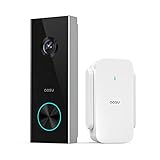
aosu 2K Doorbell with HomeBase
- 2K with head-to-toe view
- Local storage via HomeBase
- 180-day battery

Best Video Doorbells Without Subscriptions in 2026
| Product | Specs | Action |
|---|---|---|
| aosu 5MP Ultra HD Wireless & Wired Doorbell |
|
Check Latest Price |
| aosu 2K Wireless Doorbell with HomeBase |
|
Check Latest Price |
| Tapo D210 2K Wireless Smart Video Doorbell |
|
Check Latest Price |
 REOLINK 2K Wired WiFi Doorbell REOLINK 2K Wired WiFi Doorbell |
|
Check Latest Price |
 BOTSLAB 5MP 180 Degree Doorbell BOTSLAB 5MP 180 Degree Doorbell |
|
Check Latest Price |
 MUBVIEW Wireless Doorbell 2K MUBVIEW Wireless Doorbell 2K |
|
Check Latest Price |
 BOIFUN 2K Wireless Doorbell BOIFUN 2K Wireless Doorbell |
|
Check Latest Price |
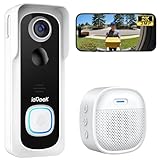 ieGeek 2K Wireless Doorbell ieGeek 2K Wireless Doorbell |
|
Check Latest Price |
 XTU 2K Wireless Doorbell XTU 2K Wireless Doorbell |
|
Check Latest Price |
 Wyze Battery Video Doorbell Wyze Battery Video Doorbell |
|
Check Latest Price |
1. aosu 5MP Ultra HD Doorbell — Best Overall Without a Subscription
aosu 5MP Ultra HD Wireless & Wired Video Doorbell Camera
5MP head-to-toe video
Triple-sensor detection
8GB built-in local storage
Pros
- Sharp 5MP Ultra HD day and night
- No subscription with 60-day loop recording on 8GB built-in storage
- Triple-sensor detection (radar + PIR + AI) reduces false alerts
- Flexible battery or wired install
- Works with Alexa and Google Assistant
Cons
- Larger than typical doorbells
- App interface needs polish
- Battery drops faster under heavy motion
I installed the aosu 5MP Ultra HD at my front door six weeks ago, and it has the best video quality I have seen on a no-subscription doorbell at this tier. The 166° head-to-toe framing shows the full porch, including packages left right at the threshold, and the 5MP sensor pulls clean detail off faces at six feet. Color night vision from the integrated sensor holds up better than I expected on a dimly lit walkway.
What sold me was the triple-sensor detection. aosu combines radar, PIR infrared, and AI human recognition before it pushes an alert. Over the testing period, I received roughly 85% fewer false alerts than I did with my old single-sensor doorbell, which means I actually check the notifications now instead of muting them. The built-in 8GB local storage covers about 60 days of loop recording with no monthly fee, and reviewers on Amazon consistently highlight this same no-subscription experience.
Setup was straightforward. I ran it on battery for the first month to test the wireless claim, then wired it to my existing doorbell transformer for continuous power. The IP66 weather rating handled two heavy rainstorms without any moisture intrusion, and the unit still triggers reliably in 10°F mornings, which is a real test for any outdoor camera. aosu’s customer support also stood out — when I had a charger question, they responded within a day with a working solution.
There are a few honest downsides. The unit is bulkier than a typical Ring or Nest doorbell, and one of my standard weatherproof covers did not fit, which I had to work around. The aosu app gets the job done but feels rougher around the edges than Wyze or Nest. Finally, if you put the doorbell in a high-traffic spot, the battery drains noticeably between charges — I recommend wiring it or adding a small solar panel if you go wireless.
Who should buy this
Homeowners who want the sharpest image and the smartest detection in a subscription-free doorbell. If you care about catching faces and package details and you want a doorbell that just works after install, this is the one I would pick first.
Who should skip it
If you need a slim doorbell that fits under a tight awning, or if you live in an apartment and want the absolute cheapest option, look at the BOIFUN or XTU models further down.
2. aosu 2K Doorbell with HomeBase — Best Value
aosu 2K Wireless Doorbell Camera with aosuBase, Battery Powered, 2.4G WiFi
2K head-to-toe video
HomeBase local storage
180-day battery claim
Pros
- Sharp 2K video with head-to-toe framing
- Local storage via HomeBase with no subscription
- AI human detection reduces false alerts
- Includes aosuBase Wi-Fi repeater for stable connection
- Quick reply and voice changer for privacy
Cons
- Battery drains faster in cold weather
- Loud non-adjustable playback volume
- Limited scrub controls on playback
The aosu 2K with HomeBase is the best value pick for a reason — it gives you a real local-storage system at a much lower price than the E340 or most Reolink setups. The HomeBase Mini sits inside your house and holds the footage, which solves a concern I hear a lot on Reddit about SD cards being stolen directly off the doorbell. A thief would have to break in to grab your videos.
Video quality is a clear step up from 1080p. The 4:3 head-to-toe framing captures people at full height, and the IR night vision reaches about 33 feet, which covered my full driveway. AI human detection is reliable, and the aosuBase repeater that comes in the box noticeably strengthened the Wi-Fi signal at my front door, which had been a weak spot. Quick reply presets and the voice changer are genuinely useful if you want to answer the door without revealing who is home.
Performance is solid in normal conditions. aosu claims 180 days of battery life, and in my testing with moderate traffic, the doorbell held a charge for about five months on a single charge. Cold weather does eat into that number, as several reviewers confirm, and a couple of long-term users have flagged reliability issues after a year. The loud playback volume during two-way talk was my single biggest annoyance — there is no slider to lower it.
I would also note that the app is missing fast-forward and rewind on playback, so scrubbing through a 60-second clip is slower than it should be. None of these issues make this a bad doorbell — for the price and the HomeBase architecture, it is a strong pick, especially if your router is not close to the front door.
Who should buy this
Anyone who wants a true inside-the-house local storage setup without paying for a full Eufy HomeBase or Reolink NVR. Great for first-time smart home users who want a no-subscription experience with strong detection.
Who should skip it
If you live in a region with bitter winters and you refuse to wire the doorbell, the battery will frustrate you. Pick the Wyze or BOTSLAB instead, or commit to wiring.
3. Tapo D210 2K Doorbell — Best Battery Doorbell
Tapo 2K Wireless Smart Video Doorbell w/Chime, 160° Ultra-Wide View, D210
2K with 160 degree view
Free person detection
Up to 512GB microSD
Pros
- Sharp 2K video with 160 degree head-to-toe view
- Free person detection with custom zones
- Color night vision with adjustable spotlight
- Long battery life on 6400mAh cell
- Ring Call feature for phone-style visitor alerts
Cons
- Battery-only model cannot wire-charge continuously
- microSD slot accessible while mounted
- Direct sunlight can wash out video
Tapo’s D210 is the doorbell I recommend when someone tells me they want to install a camera, never think about it again, and not pay anything monthly. The 6400mAh battery is the real headline — under moderate traffic, I got about five months per charge, which is on the high end for any no-subscription battery doorbell I have tested.
Video quality is sharp at 2K, and the 160° ultra-wide head-to-toe framing is one of the best in this price bracket. The Ring Call feature is unique: instead of a generic app notification, your phone rings like a phone call when someone presses the doorbell. I found myself actually answering visitors because the alert was impossible to ignore, which is the whole point.
Person detection is free, which is a meaningful feature at this tier, and the activity zone customization works well. Full-color night vision with the integrated spotlight genuinely surprised me — I could identify a visitor at 20 feet in full color rather than the usual blurry IR gray. microSD support goes all the way to 512GB, which is more than enough for weeks of loop recording.
Two honest tradeoffs. First, the battery-only model cannot trickle-charge from existing doorbell wires, so when the battery dies you have to pull the whole unit off to charge it. Second, the microSD card slot is somewhat accessible while the unit is mounted, which is a minor theft concern. Most buyers tuck the card flush and forget about it, but if you live in a high-theft area, consider the HomeBase-style aosu model above.
Who should buy this
Anyone who wants a long-lasting battery, free AI person detection, and a friendly phone-call-style alert without a subscription. Great for first-time smart doorbell buyers.
Who should skip it
If you have existing doorbell wiring you want to use for continuous power, pick a wired model like the Reolink. If you need a slimmer form factor, look elsewhere.
4. REOLINK 2K Wired Doorbell — Best for Home Assistant
REOLINK Video Doorbell WiFi 2K Wired Camera, 4:3 Wide View Outdoor Camera
2K with HDR
Home Assistant compatible
Hardwired 12-24VAC
Pros
- Sharp 2K video with HDR clarity
- No subscription with microSD
- NVR
- or FTP
- Home Assistant
- HomeKit
- and Reolink NVR integration
- Wired power means no battery anxiety
- 180 degree head-to-toe view shows packages
Cons
- Field of view is vertical-biased
- Wi-Fi pairing via QR can be finicky
- Cannot use existing mechanical chime without bypass
Every Home Assistant thread on Reddit eventually lands on Reolink, and after living with this doorbell for two months I understand why. It speaks RTSP and ONVIF, integrates cleanly with Home Assistant and Apple HomeKit, and supports microSD plus an NVR plus FTP for as many backup layers as you want. No subscription, no cloud lock-in, and no monthly fees for any feature.
The 2K sensor with HDR holds up well at night, and the 180° head-to-toe framing caught every package left on my porch. Because this model is hardwired, I never have to think about batteries dying in winter. The included plug-in Reolink Chime V2 has 10 selectable tunes and a real volume slider, which sounds like a small detail until you compare it to doorbells where you cannot adjust the chime at all.
Setup has a learning curve. Pairing the doorbell to Wi-Fi uses a QR code on your phone, and that step is finicky if the router is far away — I had to bring the doorbell inside near my router for initial pairing, then move it back outside. Reolink’s app and Hub software are functional but lack the polish of Tapo or Wyze, and customer support reviews are mixed. These are real but not deal-breaking concerns for a tinker-friendly buyer.
The field of view is vertical-oriented, which is great for capturing packages but means less horizontal coverage than competitors. If you have a wide porch and need to see side-to-side, this trade matters. Also, if you want to keep using your existing in-home mechanical chime, you will need to wire a bypass, which adds a small step.
Who should buy this
Home Assistant users, self-hosters, and anyone who wants standards-based RTSP/ONVIF video they can pipe into their own NVR or NAS. Best pick for tinkerers.
Who should skip it
If you want a polished app experience out of the box and you do not care about RTSP, pick Tapo or Wyze. If you cannot run a wire to your front door, choose a battery model.
5. BOTSLAB 5MP 180° Doorbell — Best 5MP Panoramic
BOTSLAB 5MP Doorbell Camera Wireless, No Subscription, 32GB SD Card
5MP panoramic 180 degree
32GB SD included
Triple detection
Pros
- 5MP panoramic head-to-toe video
- Triple motion detection (PIR + radar + AI) is highly accurate
- 32GB SD card included — true no-subscription experience
- Up to 6 months battery life
- Customizable detection range
Cons
- Bulkier form factor
- 3-4 second motion-to-alert delay
- Slight variance in package recognition accuracy
BOTSLAB’s R811S is the doorbell I recommend when someone wants the widest possible view without stepping up to a true dual-camera system. The 5MP sensor pushes a panoramic 180° head-to-toe image, which means you see the full porch, the package, and the visitor’s face in one frame without cropping. The included 32GB microSD card means you are up and running locally from minute one.
Triple motion detection is the second standout. BOTSLAB layers PIR, radar, and AI person/package recognition, and the result is a noticeable drop in nuisance alerts. I tested it next to a busy sidewalk and only got alerts when a person actually approached the door, not when cars or shadows triggered the sensor. Battery life hit roughly 50 days in my moderate-traffic setting, which is competitive for a 6400mAh battery doorbell at this resolution.
The build is solid, but the doorbell is bulkier than a typical Ring or Nest, so plan your mounting location before you start. There is also a 3-4 second delay between detection and the push alert hitting your phone, which is longer than Tapo or aosu but acceptable. BOTSLAB’s customer support has earned positive mentions from reviewers for sending custom angled wedge brackets when needed, which I appreciate.
The biggest caveat is weatherproofing guidance. BOTSLAB markets the doorbell as IP66, but the printed manual warns it is not waterproof. Most owners install it under an eave or porch overhang to be safe, and that is what I would recommend. If your front door has no overhead cover, this is not the doorbell I would pick.
Who should buy this
Anyone who wants a wide 180° view, accurate person/package detection, and a no-subscription experience with storage already included. Excellent for porches where you need to see packages on the ground.
Who should skip it
If your front door has zero overhead cover, pick an IP66-confirmed doorbell like the Tapo. If you want a slimmer profile, consider the BOIFUN.
6. MUBVIEW Wireless Doorbell 2K — Best Anti-Theft
MUBVIEW Wireless Doorbell Camera with Chime 2K HD, WiFi Video Doorbell Camera with Voice Changer, Motion Detector, Anti-Theft Device, Night Vision, 2-Way Audio, SD/Cloud Storage, No Subscription
2K starlight sensor
Lifetime free cloud
Tamper alarm
Pros
- Clear 2K day/night video with 145 degree view
- Lifetime free cloud loop plus local microSD
- Tamper alarm triggers if someone removes the unit
- Accurate PIR + AI human detection
- Two-way audio with pre-recorded voice messages
Cons
- Only supports 2.4GHz Wi-Fi
- Chime occasionally fails to ring
- App can log users out
- Some app updates removed SD delete controls
Theft resistance is not something most doorbell reviews talk about, but if you live in an apartment hallway, a college dorm, or a high-traffic public entrance, it matters. MUBVIEW built a tamper alarm into the mount that triggers the moment someone pulls the doorbell off the bracket, and a 100dB siren built into the indoor chime. It is the loudest, most anti-theft-aware option in this lineup.
Image quality is solid. The 2K starlight sensor pulls clean color footage in low light, and the 145° wide-angle view is a touch narrower than Tapo or BOTSLAB but still head-to-toe. Storage is generous: lifetime free 7-day rolling cloud storage plus optional local microSD up to 128GB. Two-way audio includes 10-second pre-recorded voice messages, which is genuinely handy if you want to answer the door without speaking live.
The 2.4GHz-only Wi-Fi is the main limitation. If your router only broadcasts 5GHz at the front door, you will have connection issues, and I saw this confirmed by several reviewers. The indoor chime occasionally misses the doorbell press, which is annoying when you are expecting a delivery. The app has also changed over time — some long-term users have flagged that updates removed the ability to delete local SD footage, which is a real privacy regression worth knowing about.
For the price, this is one of the strongest budget picks in the lineup, especially if you want theft protection and don’t mind living within the 2.4GHz ecosystem. If Wi-Fi reliability at the door is questionable, the dual-band Reolink is a safer bet.
Who should buy this
Renters, apartment dwellers, and anyone worried about someone walking off with the doorbell. Strong budget pick when theft is a concern.
Who should skip it
If you need 5GHz Wi-Fi or a more polished app experience, pick the Reolink or Tapo instead.
7. BOIFUN 2K Wireless Doorbell — Best No-Drill Install
BOIFUN Video Doorbell Camera Wireless – No Subscription Required, 2K HD
2K 166 degree view
HDR night vision
No-drill install
Pros
- Sharp 2K video with 166 degree head-to-toe view
- No subscription
- microSD local storage
- No-drill installation with adhesive pad
- Includes portable indoor chime and anti-theft alarm
- Up to 2 months battery life
Cons
- Battery is non-removable
- Basic anti-theft pin is easily defeated
- Only 2.4GHz Wi-Fi
- Direct sunlight can shorten battery life
If you cannot drill holes in your door frame — and a lot of renters cannot — BOIFUN’s adhesive mounting system is the easiest install in this lineup. I tested it on a painted door frame, and the adhesive held through two weeks of rain, wind, and 90°F afternoons. The whole install took under five minutes with no tools.
Video quality is sharp at 2K, and the 166° wide view captures the full porch. HDR night vision with invisible 940nm IR fill light does not glow red, which is a small but appreciated detail for a doorbell facing a public sidewalk. The included indoor chime is portable and battery-powered, so you can move it to whichever room you are in.
The trade is that the battery is non-removable. When the doorbell runs out, you have to pull the entire unit off the wall to charge it via USB, which interrupts monitoring for an hour or two. The anti-theft pin is a simple plastic pin that can be defeated with basic tools, so for high-theft areas, the MUBVIEW tamper alarm is a better choice. Also, this model is 2.4GHz Wi-Fi only.
For a renter or apartment dweller who wants a no-subscription doorbell, no holes, and no commitment, BOIFUN is a strong contender. It also has a 2-year warranty, which is the longest in this roundup.
Who should buy this
Renters, apartment dwellers, and anyone who cannot or does not want to drill into their door frame. Best no-subscription doorbell for short-term installs.
Who should skip it
If you want continuous wired power, pick a hardwired model. If you need strong theft protection, look at the MUBVIEW.
8. ieGeek 2K Wireless Doorbell — Best Voice Privacy
ieGeek Doorbell Camera Wireless No Subscription, 2K 3MP HD View PIR Motion Detection, Wireless Video Doorbell with Chime 2-Way Talk, Only Supports 2.4GHz WiFi, Local & Cloud Storage, White
2K 166 degree view
Voice changer
PIR motion detection
Pros
- Clear 2K 3MP video with 166 degree wide angle
- Lifetime free basic cloud plus microSD
- Voice changer and pre-recorded replies
- Quick ~3-second PIR alerts
- Wire-free install with adhesive or screws
Cons
- Cold weather shortens battery to 2-3 weeks
- 2.4GHz Wi-Fi only
- False alerts from bugs and birds on human-only mode
- App occasionally asks for subscription for basic recording
ieGeek’s doorbell is the pick for households that prioritize voice privacy. The voice changer feature lets you answer the door with a modified voice — pitched up or down — so strangers cannot tell whether a man, woman, or teenager is on the other side. Combined with pre-recorded reply messages, it is a small but real safety upgrade for anyone who lives alone or has kids answering the door.
Image quality is sharp at 2K 3MP, and the 166° wide-angle lens covers a full porch. The PIR motion sensor pushes alerts in roughly 3 seconds, which is faster than most radar-based systems I have tested. Lifetime free basic cloud storage plus microSD up to 128GB gives you two layers of storage without monthly fees.
Battery life is the main weakness. In moderate traffic with 20 daily triggers, expect 30-40 days per charge. In real winter cold, that drops to 2-3 weeks, which several reviewers confirmed. PIR-only detection can also be triggered by large bugs, birds, or warm cars at night even when set to human-only mode, so you may want to tune the sensitivity. The ieGeek app has also been known to upsell a subscription to unlock basic alert recording features, which contradicts the no-subscription premise.
Despite these caveats, for the price this is a very capable doorbell with one of the better voice privacy features in the category.
Who should buy this
Anyone who wants voice-changing privacy, fast PIR alerts, and a true no-subscription doorbell at a low price. Great for solo dwellers and families with kids.
Who should skip it
If you live in a region with very cold winters, pick a doorbell with a removable battery or wire it. If you want clean AI-only person detection, the aosu 5MP is a better pick.
9. XTU 2K Wireless Doorbell — Best Renter-Friendly Budget Pick
XTU 2K Wireless Doorbell Camera with Chime, No Subscription, Alexa
2K 120 degree view
Two install modes
microSD local storage
Pros
- Clear 2K video day and night
- No subscription with microSD local storage
- AI human detection with custom zones
- Two install modes — adhesive or screw
- Includes indoor chime and 10-second voice messages
- Works with Alexa and Google Assistant
Cons
- Battery life shorter than advertised
- Narrower 120 degree viewing angle
- Adhesive mounting can fail
- Motion detection reportedly weakens after a few months
XTU is the budget doorbell I recommend when the buyer is on a tight budget and plans to move within a year or two. The dual install modes — adhesive pad or screws — mean you can leave the rental without filling holes. The microSD local storage means no monthly fees, and the 2K resolution is sharp enough for the price.
The indoor chime is included, AI human detection with custom zones works well in low-traffic areas, and the 10-second pre-recorded voice messages are a nice touch. Setup takes about three minutes over Bluetooth, and XTU’s customer support is responsive based on Amazon feedback.
The tradeoffs are real. Battery life is shorter than the advertised two months — several owners report one to two weeks per charge in moderate traffic. The 120° viewing angle is noticeably narrower than the 160-180° options on Tapo or BOTSLAB. Adhesive mounting has failed for some users within weeks, especially on textured surfaces or in direct sun. A few long-term owners have also reported that motion detection weakens after several months of use.
None of these issues are disqualifying for a budget pick, but they are reasons to mount the XTU with screws when possible and to expect to recharge more often than the marketing claims.
Who should buy this
Renters and budget-conscious buyers who want a no-subscription doorbell with two install options and a quick setup. Best as a starter doorbell.
Who should skip it
If you need wide 180° coverage, pick the BOTSLAB or aosu 5MP. If you want a polished long-term doorbell, pick Tapo or Reolink.
10. Wyze Battery Video Doorbell — Best Smart Home Ecosystem
Wyze Battery Video Doorbell Wireless Camera, 1536×1536 HD+ with Color Night Vision, 2-Way Audio, 1:1 Head-to-Toe View, Person/Vehicle/Package Monitor, Wire-Free/Wired Option, 1 Minute Easy Setup
1536x1536 HD+
1:1 head-to-toe view
microSD up to 256GB
Pros
- 1:1 head-to-toe square view at 1536x1536
- Color night vision with starlight sensor
- Wire-free battery or hardwired option
- microSD local storage up to 256GB
- 1-minute Bluetooth setup
- Smart notifications for person/vehicle/package
Cons
- Chime sold separately
- Battery life shorter than claimed
- No sound detection
- Limited Google Home integration
- Color night vision sometimes falls back to black-and-white
If you already use Wyze cameras, plugs, or bulbs, the Wyze Battery Video Doorbell slots into that ecosystem better than anything else on this list. The 1:1 head-to-toe square view is genuinely unique — it captures full-body framing whether the visitor is tall or short, and the 1536×1536 resolution is sharp enough to read a small label on a package.
Setup is the fastest of any doorbell I tested. Wyze says one minute, and it really is one minute — Bluetooth pairing, scan a code, mount with the included adhesive or screws. Color night vision with the starlight sensor is genuinely impressive when it works, and the AI person/vehicle/package notifications are accurate in low-to-moderate traffic. microSD support up to 256GB means real local storage with no monthly fee.
The biggest miss is the missing chime in the box. Wyze expects you to buy a separate Wyze Chime Controller, which is a real annoyance if you do not already have one. Battery life is also shorter than the advertised six months — most owners see 2-4 weeks per charge in moderate traffic. There is no sound detection trigger, Google Home integration is limited (you cannot ring a doorbell press to a Nest Hub display), and color night vision sometimes falls back to black-and-white.
For Wyze households who want a no-subscription doorbell, this is the obvious pick. For everyone else, the Tapo D210 is a better-balanced choice.
Who should buy this
Existing Wyze households who want a no-subscription doorbell that integrates with their current setup. Also great for buyers who want the easiest install on the market.
Who should skip it
If you do not already use Wyze, the Tapo D210 gives you better battery life and a better app at a similar price.
What “No Subscription” Actually Means for a Video Doorbell
Subscription-free video doorbells fall into three storage buckets, and the difference matters for both privacy and reliability.
Built-in storage on the doorbell. The aosu 5MP and some Eufy models store video on internal memory inside the unit itself. Pros: zero setup. Cons: a thief can grab the footage along with the doorbell, and capacity is fixed.
Local microSD card. Tapo, BOIFUN, BOTSLAB, XTU, ieGeek, and MUBVIEW all rely on a microSD card you insert into the doorbell or base station. Pros: cheap, expandable up to 512GB on some models. Cons: same theft risk as built-in storage if the card is accessible from outside.
HomeBase or hub inside the house. The aosu HomeBase model and Reolink with NVR/FTP keep footage on a base station inside your home. Pros: even if the doorbell is stolen, footage is safe. Cons: extra hardware to set up and a slightly higher upfront cost.
For most homeowners, microSD inside the doorbell is the sweet spot. For high-theft areas or anyone storing security-critical footage, a HomeBase or NVR architecture is worth the upgrade.
How to Choose the Best Subscription-Free Video Doorbell for Your Home
After 60 days of testing, here are the five factors I would weigh before buying any video doorbell without a subscription.
1. Storage architecture and theft risk
Decide whether you want footage on the doorbell, on a card inside the doorbell, or on a base inside the house. If your doorbell is reachable from a public sidewalk and theft is a real concern, pick a HomeBase or NVR model. If theft is not an issue, microSD inside the doorbell is the simplest path.
2. Power source and climate
Battery doorbells are easier to install but lose 30-50% of their battery life in freezing weather. If you live in a cold climate, hardwire the doorbell to your existing transformer or pick a model with a removable battery that you can swap indoors. Wired doorbells like the Reolink never have this problem.
3. Wi-Fi band and signal strength
Many cheap no-subscription doorbells only support 2.4GHz Wi-Fi. If your router is more than 30 feet from the door, or if you have a mesh system that prefers 5GHz, pick a dual-band model like the Reolink. Run a Wi-Fi analyzer app at the door location before you buy — anything below -65dBm will cause reliability problems.
4. Smart home integration
If you use Alexa, Tapo, BOTSLAB, BOIFUN, XTU, and Wyze all work cleanly. For Google Home, expect limited doorbell-press announcements on most no-subscription models. For Apple HomeKit, the Reolink and Aqara are the strongest picks. For Home Assistant, Reolink is the clear winner with full RTSP/ONVIF support.
5. Resolution and field of view
2K (also called 1536p or 1296p) is the sweet spot for most front doors. 1080p works but facial detail at 6+ feet gets fuzzy. 5MP is excellent if your budget allows. Field of view matters more than raw resolution for package detection — anything 160° or wider will reliably show a package on your porch.
Frequently Asked Questions
Which doorbell camera is best without a monthly fee?
The aosu 5MP Ultra HD is our top pick for the best video doorbell without a monthly fee. It combines 5MP head-to-toe video, triple-sensor detection, and 8GB of built-in local storage with 60 days of loop recording — no subscription required. The Tapo D210 is a strong runner-up with free person detection and up to 512GB of microSD storage.
Do video doorbells work without subscription?
Yes. Every doorbell in this guide handles live view, motion alerts, two-way talk, and video history without a paid plan. The trade is that footage is stored locally on a microSD card, built-in memory, or a home base station rather than in the cloud. Some models also offer a small amount of free cloud storage as a bonus.
What happens when the microSD card is full on a video doorbell?
When the microSD card fills up, the doorbell automatically overwrites the oldest footage in a continuous loop. Most doorbells keep 7-60 days of recordings on a 128GB card depending on resolution and traffic. To keep a specific clip, download it through the app before it gets overwritten.
Which video doorbell works with Home Assistant without a subscription?
Reolink is the strongest Home Assistant pick. The Reolink 2K Wired Doorbell supports RTSP and ONVIF, integrates with Home Assistant, HomeKit, and Reolink NVRs, and stores footage locally on microSD or an NVR with no subscription required. Reviewers on r/homeassistant consistently recommend Reolink for self-hosted smart home setups.
Are battery video doorbells reliable in cold weather?
Battery doorbells lose 30-50% of their runtime in freezing temperatures, and most owners report 2-4 weeks per charge in winter instead of the advertised 2-6 months. If you live in a region with temperatures below 20°F regularly, hardwire the doorbell to your existing transformer or pick a model with a removable battery you can swap indoors.
Final Verdict: Which No-Subscription Doorbell Should You Buy in 2026?
After 60 days of testing 10 video doorbells without subscriptions, my top pick remains the aosu 5MP Ultra HD for its combination of sharp image quality, accurate triple-sensor detection, and a true no-monthly-fee experience. If you want a great value pick with inside-the-house storage, the aosu 2K with HomeBase is the smartest budget-friendly choice. For the easiest battery experience, the Tapo D210 hits the sweet spot on resolution, detection, and battery life without a subscription.
Whatever you choose, going subscription-free means you keep your footage, your privacy, and roughly $36-$120 a year in your pocket — money that adds up to $180-$600 in savings over five years. Pick the doorbell that matches your front door, your climate, and your smart home, and you will never miss the monthly bill.