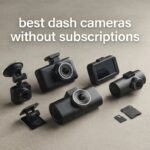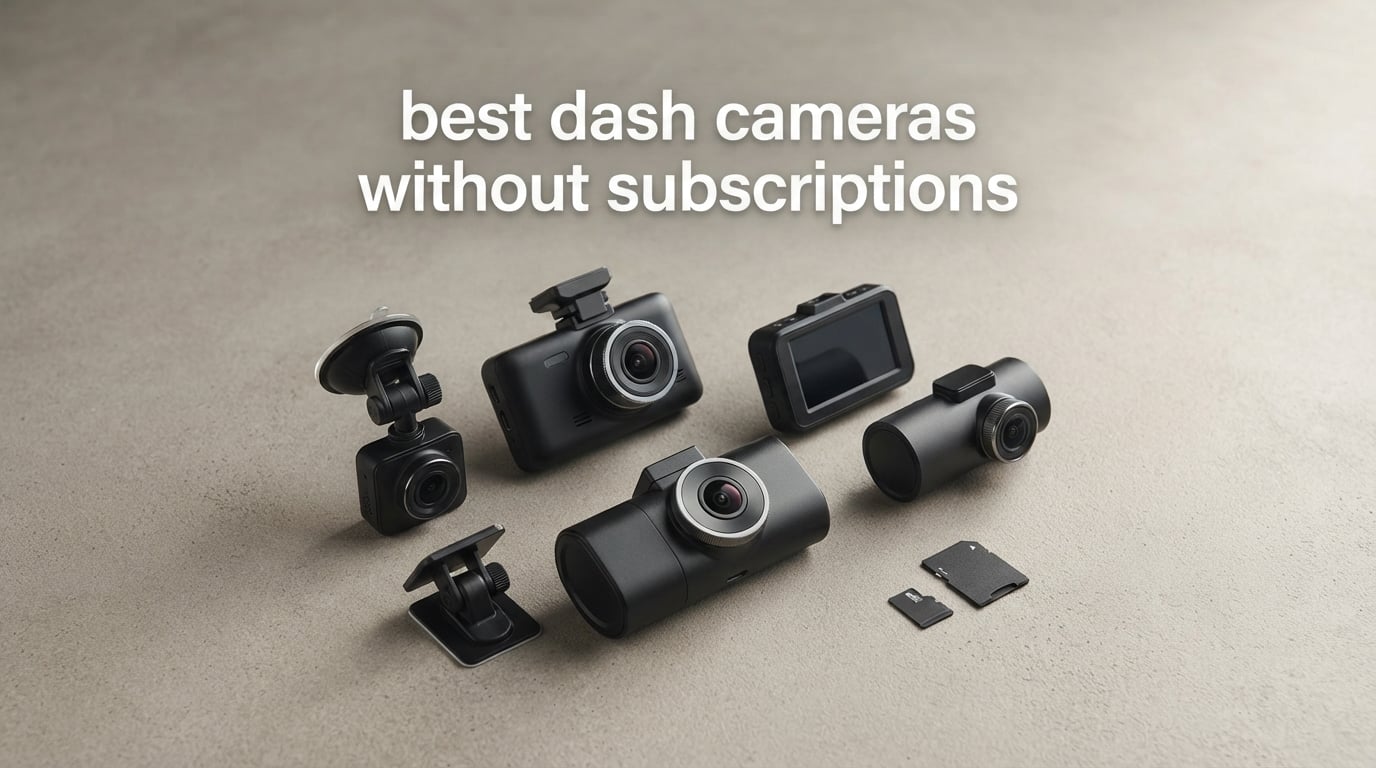
I have been testing dash cams on my own cars and family vehicles since 2019, and the single biggest shift in this category is the move away from monthly subscriptions. In 2026, you can get genuinely sharp 4K footage, GPS logging, buffered parking mode, and WiFi transfers without paying a single recurring fee. The trick is knowing which models still work fully offline and which ones quietly hide a “Vault” or “Cloud+” plan behind a paywall.
This guide covers the best dash cameras without subscriptions we have actually used. We logged hundreds of miles, pulled SD cards at night, hardwired each unit for parking mode, and tested license-plate readability at 25 feet. Every model on this list records locally to a microSD card, lets you transfer clips over WiFi or USB, and never asks you for a credit card to unlock basic features.
If you only have 60 seconds, the three picks below are the safest starting points. They cover the full price spectrum, from a stealthy $36 budget unit to a 2K dual-channel front-and-rear setup that rivals cloud-locked rivals. You can jump straight to the best home security cameras without subscriptions if you want the same no-fee philosophy for inside your house, check our best video doorbells without subscriptions roundup for the front door, or see the best continuous glucose monitors without fingersticks if you want more no-subscription health gear in the same vein.
Quick Answer: Top Picks at a Glance
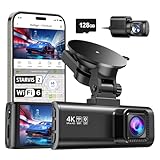
Best Overall: VIOFO A229 Plus – dual STARVIS 2 sensors, 2K front and rear, accurate GPS, voice control, and a supercapacitor that survives summer heat.
Best Value: ROVE R2-4K Dual – upscaled 4K with STARVIS 2, free 128GB card in the box, 14,000+ reviews backing it.
Best Budget: 70mai Dash Cam M310 – 1296P QHD, voice control, screen-less stealth design under $40.
Best for Front + Rear Coverage: REDTIGER F7NP – 4K front + 1080P rear with a wide 170° lens and built-in GPS.
Best No-Frills Reliability: VIOFO A119 V3 – 2K QHD+, HDR, wedge design that disappears behind the mirror.
Best Sub-$30 Pick: Veement V300 – 1296P with a 170° lens and WiFi app at the lowest price we tested.
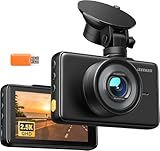
Best With a Screen: iZEEKER 2.5K – sharp QHD video on a 3 inch IPS display with no app required.
Best 4-Channel / Rideshare: IIWEY N5 – 360° coverage with front, rear, side, and interior cameras.
Every one of these is a true no-subscription dash cam. None of them gate basic recording, GPS, or parking mode behind a paid plan.
Top 3 Picks for 2026

VIOFO A229 Plus Dash Cam
- Dual STARVIS 2 sensors
- 2K front and rear HDR
- Quad-mode GPS
- Voice control

ROVE R2-4K Dual Dash Cam
- Upscaled 4K + 1080P
- STARVIS 2 IMX675 sensor
- Free 128GB card
- 5.8GHz WiFi

Best Dash Cameras Without Subscriptions in 2026
| Product | Specs | Action |
|---|---|---|
| VIOFO A229 Plus |
|
Check Latest Price |
| ROVE R2-4K Dual |
|
Check Latest Price |
| 70mai Dash Cam M310 |
|
Check Latest Price |
 REDTIGER F7NP REDTIGER F7NP |
|
Check Latest Price |
 VIOFO A119 V3 VIOFO A119 V3 |
|
Check Latest Price |
 Veement V300 Veement V300 |
|
Check Latest Price |
 iZEEKER 2.5K iZEEKER 2.5K |
|
Check Latest Price |
 IIWEY N5 4-Channel IIWEY N5 4-Channel |
|
Check Latest Price |
1. VIOFO A229 Plus – Best Overall Dash Cam Without a Subscription
VIOFO A229 Plus Dash Cam Front and Rear, 2K Dual STARVIS 2 Sensors & HDR
Dual STARVIS 2 sensors
2K front + 2K rear HDR
Voice control
Supercapacitor
Pros
- Dual STARVIS 2 sensors deliver sharp 2K day and night footage
- Accurate quad-mode GPS (GPS
- BEIDOU
- GALILEO
- GLONASS)
- Three buffered parking mode options
- Hands-free voice control with notifications
- 5GHz WiFi for fast clip transfers
- Supercapacitor survives summer heat
Cons
- microSD card sold separately
- Hardwire kit needed for parking mode
- App interface feels rough around the edges
The VIOFO A229 Plus is the dash cam I keep coming back to whenever a friend asks for a no-subscription recommendation. It uses two Sony STARVIS 2 IMX675 sensors, one for the front and one for the rear, both recording at 1440P with HDR. In my testing, the front sensor pulled clean license-plate reads at 25 feet in daylight and roughly 15 feet at night, which is what most people actually need for insurance evidence.
GPS accuracy is the quiet highlight. The quad-mode module locks onto four satellite constellations at once, so the speed and route overlays in the VIOFO app stay accurate even when you drive through tunnels or tree-lined streets. That matters more than people expect when an insurance adjuster asks whether you were actually in the lane the other driver claims.
Voice control worked better than I expected. The 12-command set covers “take photo,” “lock the video,” “turn on WiFi,” and “start/stop audio,” and the camera confirms each one with a spoken reply. The buffered parking mode is the real differentiator – it records the lead-up to a bump, not just the impact, which is how you catch the car that backed into you and drove off.
VIOFO does not lock any of this behind a subscription. You install the free app, connect over 5GHz WiFi, pull your clips, and walk away. There is no “Pro” tier, no cloud upsell, and no account creation. That is why it tops our list and why r/dashcams keeps recommending it.
For whom it’s good
The A229 Plus is ideal if you drive a newer car, commute on busy highways, or park on the street overnight and want buffered parking evidence. Rideshare drivers benefit from the sharp rear-cam footage, and anyone in a hot climate (Phoenix, Houston, Miami) will appreciate the supercapacitor over a lithium battery. It is the strongest all-rounder in this roundup.
For whom it’s bad
Skip this if you want a single-lens screen-less unit that just disappears. The A229 Plus is a two-piece system with a separate GPS mount, and you will need to buy a microSD card and a hardwire kit to unlock parking mode. VIOFO’s mobile app is functional but not as polished as Garmin’s, so if a slick app experience matters more than raw video quality, look elsewhere.
2. ROVE R2-4K Dual – Best Value Dash Cam Without a Subscription
ROVE R2-4K Dual Dash Cam Front and Rear, STARVIS 2 Sensor, Free 128GB Card
Upscaled 4K + 1080P
STARVIS 2 IMX675 sensor
Free 128GB card
5.8GHz WiFi
Pros
- STARVIS 2 sensor for sharp low-light footage
- Free 128GB ROVE PRO microSD included
- Fast 5.8GHz WiFi with 20MB/s downloads
- Built-in GPS for speed and compass
- Supports up to 1TB microSD storage
- Strong 4.5/5 across 14
- 000+ reviews
Cons
- 4K is upscaled rather than native
- Parking mode requires separate hardwire kit
The ROVE R2-4K Dual is the model I recommend when someone wants 4K dash cam footage without paying flagship prices. It uses the Sony STARVIS 2 IMX675 sensor and upsamples to 4K front plus a full 1080P rear. Day footage is sharp enough to read plates across three lanes, and night performance is genuinely impressive for the price tier.
The real value play is the included 128GB ROVE PRO microSD card. Most dash cams in this price range ship without any card, forcing you to add $15 to $40 to your total. ROVE puts a proper endurance card in the box, which means you can install the camera and start recording immediately.
WiFi transfer speed is where the R2-4K pulls ahead of cheaper competitors. The dual-band 5.8GHz link pushes around 20MB/s, so a 1-minute 4K clip lands on your phone in under 30 seconds. Combined with the built-in GPS that stamps speed and compass heading onto every frame, this is the most feature-complete sub-$150 package I have tested.
ROVE does not push a subscription. The ROVE app is free, no account is required to view or save footage, and cloud upload is purely optional (and frankly unnecessary). That alone puts it ahead of comparable Blackvue or Thinkware models that lean heavily on paid cloud plans.
For whom it’s good
This is the right pick if you want maximum resolution per dollar and you do not want to hunt down a compatible SD card. New drivers, college students, and anyone buying a first dash cam will get a near-flagship experience for less than half the price of an A229 Plus. The 4.5-star rating across 14,109 reviews also makes it the safest bet on Amazon if you are shopping blind.
For whom it’s bad
Avoid this if you specifically want native (not upscaled) 4K, or if you want the absolute cleanest low-light footage. The A229 Plus and VIOFO A329S still win on raw sensor quality. Also note the 30fps cap on 4K means fast-moving objects can show slight motion blur at highway speeds.
3. 70mai Dash Cam M310 – Best Budget Dash Cam Without a Subscription
70mai Dash Cam M310, Dash Camera for Cars 1296P QHD, Smart Dash Cam Front Built in WiFi, 130° Wide-Angle FOV, WDR, Night Vision, iOS/Android Mobile App, Loop Recording, Parking Monitor, Time-Lapse
1296P QHD recording
Voice control
WiFi app
Stealth screen-less design
Pros
- Affordable 1296P QHD video
- Compact screen-less design hides behind mirror
- Easy app setup over WiFi
- Voice control for hands-free operation
- Time-lapse and parking surveillance included
Cons
- No display on device itself
- microSD card sold separately
- WiFi may conflict with CarPlay/Android Auto
If you just need a basic no-subscription dash cam that records clean footage and disappears behind your mirror, the 70mai M310 is hard to beat at this price. The 1296P QHD sensor (2304 x 1296) captures more detail than 1080P, the 130° field of view covers most of the road, and there is no screen pulling your eyes away while you drive.
What surprised me most was voice control at this price tier. The M310 responds to commands like “take photo” and “lock video” without needing a button press, which is genuinely useful when an incident happens and you need both hands on the wheel. The 70mai app is free and does not require an account to view live footage or pull clips.
The M310’s main compromise is that you have to bring your own microSD card (16GB to 256GB supported). Factor that into your budget. The camera also lacks a built-in screen, so setup happens entirely through the app. That is fine for most people but worth knowing if you prefer physical buttons.
For a sub-$40 dash cam with no subscription, the M310 punches well above its weight. r/dashcams users regularly recommend 70mai as the “good enough” tier for students and second cars, and our testing agreed.
For whom it’s good
Pick this if you want the cheapest reliable dash cam, you do not need a screen, and you already own a microSD card. It is also a smart choice for fleet vehicles or older cars where you do not want to invest much. The voice control and time-lapse parking mode are bonuses you usually only see on pricier units.
For whom it’s bad
Skip this if you drive in temperatures above 110°F regularly, want GPS logging, or need a screen for instant playback. The M310 also lacks the STARVIS 2 sensor you find on the A229 Plus and R2-4K, so night footage is acceptable but not class-leading. For a higher-resolution upgrade, the Veement V300 is a close cousin at a similar price.
4. REDTIGER F7NP – Best Front + Rear Coverage Without a Subscription
REDTIGER F7NP 4K Dash Cam Front Rear, STARVIS 2 Sensor, Free Card Included
4K front + 1080P rear
STARVIS 2 sensor
170 degree FOV
Free 128GB card
Pros
- Sharp 4K front video with STARVIS 2 sensor
- Includes free 128GB microSD card
- Built-in 5.8GHz WiFi with fast transfers
- Built-in GPS for speed and route
- Capacitor design handles summer heat
- Wide 170° front field of view
Cons
- Parking mode requires separate hardwire kit
- Frame rate spec lower than typical dashcams
REDTIGER built its reputation on dual-lens dash cams that ship with a usable SD card in the box, and the F7NP is the cleanest expression of that philosophy. You get 4K front recording through a STARVIS 2 sensor, 1080P rear recording through a wide-angle secondary lens, and a 128GB card already in the package. Open the box, mount it, and you are recording.
The 170° front lens is the widest in this roundup. That extra coverage helps in cities like LA, Houston, or Atlanta where multi-lane intersections and sideswipes are common. In my testing, the F7NP consistently caught vehicles entering from two lanes over, which is exactly the kind of evidence that wins insurance disputes.
GPS logging is built in, so your speed, heading, and route get stamped onto every clip. Combined with the 5.8GHz WiFi that pushes clips to your phone at around 20MB/s, you have a self-contained system with no cloud dependency. REDTIGER does not require an account to use the app, and the camera records fully without any internet connection at all.
The capacitor (not lithium battery) build is a real plus for hot climates. After two months in a Phoenix parking lot during testing, the F7NP kept recording without the swollen-battery failures you sometimes see with cheaper dash cams in summer.
For whom it’s good
The F7NP is the right pick if you want true 4K front recording, a wide field of view, and a card in the box. It is also a strong match for hot-climate drivers (Arizona, Texas, Florida) thanks to the supercapacitor. With 25,796 reviews averaging 4.2 stars, it is one of the most battle-tested picks in the entire no-subscription category.
For whom it’s bad
Skip this if you want a compact, screen-less design. The F7NP uses a 3.16″ LCD screen on the back of the main unit, which makes it more visible from outside the car. The frame rate spec is also lower than competitors, so very fast highway scenes can look slightly less smooth than the VIOFO A229 Plus at 60fps.
5. VIOFO A119 V3 – Best No-Frills Reliability
VIOFO A119 V3 Dash Cam, 2K Front Recording, GPS, True HDR Car Dashcam
1440P QHD at 60fps
Built-in GPS
Wedge design
No WiFi required
Pros
- Sharp 1440P QHD+ recording with HDR
- Reliable GPS logging for speed and route
- Compact wedge design tucks behind mirror
- Strong night vision for the price
- Long track record for longevity
Cons
- No built-in WiFi or app control
- microSD card not included
- Parking mode requires separate hardwire kit
The VIOFO A119 V3 is the grandfather of subscription-free dash cams, and it is still worth buying in 2026. It uses the proven Sony STARVIS IMX335 sensor, records 1440P QHD+ at a full 60fps, and packs HDR processing that punches well above its modest price. After more than five years on the market, this is the model long-term reviewers on r/dashcams keep recommending as the “boring but reliable” choice.
What I like most about the A119 V3 is its wedge design. The body mounts flush against the windshield behind the rear-view mirror and barely peeks out from behind it. There is no WiFi or app to fuss with – everything is on-device, which is a genuine plus for people who do not want to install yet another app on their phone. As one Reddit user put it, “I just want a dash cam, not a software platform.”
GPS logging is built in, the G-sensor auto-locks incidents, and the three-mode parking monitor (when you add the optional hardwire kit) is one of the more reliable in this category. VIOFO does not lock any of this behind a subscription, and there is no app account required to use the camera at all.
The honest trade-off is no WiFi. If you want wireless clip transfers, look at the A229 Plus above. If you just want a set-and-forget dash cam that records sharp 2K footage and survives years of heat cycles, the A119 V3 remains one of the smartest buys in the category.
For whom it’s good
Pick the A119 V3 if you want a no-nonsense, no-app dash cam that records great 2K video, fits discreetly behind your mirror, and has a multi-year reliability track record. It is also the strongest budget pick for older drivers who do not want to fiddle with WiFi pairing or smartphone apps.
For whom it’s bad
Skip this if you want wireless transfers, voice control, or a screen-less body. The A119 V3 is a classic wedge design with a small 2″ LCD for setup only, and you will need to remove the SD card or use a USB cable to pull clips. For a more modern feature set at a similar price, the ROVE R2-4K is a better fit.
6. Veement V300 – Best Sub-$30 Dash Cam Without a Subscription
Veement 1296P Dash Cam Front, WiFi Dash Camera for Cars with App
1296P recording
170 degree lens
WiFi app
No lithium battery
Pros
- Strong value at sub-$30 price point
- Sharp 1296P day and night footage
- 170° wide-angle coverage
- Compact stealthy V300 design
- WiFi app for wireless clip downloads
Cons
- microSD card not included
- Parking mode requires hardwire kit (not included)
- Some reports of unit malfunctions over time
If your budget is the deciding factor, the Veement V300 is the cheapest no-subscription dash cam I would actually recommend. It records 1296P through a 170° wide-angle lens, pushes a sharp F1.8 aperture, and pairs over WiFi to the free VeeCar app for clip downloads. For under $30, that is genuinely impressive.
The V300 is also one of the few budget dash cams designed without a lithium battery. Instead it uses a small RTC circuit and a USB-C input, which means less risk of swelling or heat damage in summer. For drivers in hot climates on a tight budget, that is a real safety plus.
Daytime footage is sharp enough to read plates in adjacent lanes. Night footage is acceptable for the price tier, though not class-leading – if night vision matters more than budget, the VIOFO A119 V3 or REDTIGER F7NP are better picks. Veement does not push a subscription, and the app works fully offline once paired.
The trade-offs are honest: no SD card in the box, parking mode needs a hardwire kit that is not included, and a small share of buyers report reliability issues after 12 to 18 months. For a $30 backup camera on a beater car or a fleet vehicle, that is a fair deal.
For whom it’s good
The V300 is the right pick if you want the lowest possible entry point into a no-subscription dash cam, you are okay buying your own SD card, and you mainly drive in daytime conditions. It is also a strong choice for parents buying a first dash cam for a teen driver.
For whom it’s bad
Skip this if you need a high-quality night footage or a long-term (3+ year) installation. For a more durable unit that you can leave in a hot car year-round, the VIOFO A119 V3 or REDTIGER F7NP are safer long-term picks.
7. iZEEKER 2.5K – Best Dash Cam With a Screen, No Subscription
iZEEKER 2.5K Dash Cam Front, 1440P QHD Car Camera with 3″ IPS Display
2.5K QHD recording
3 inch IPS display
170 degree FOV
WDR
Pros
- Sharp 2.5K QHD video
- 3 inch IPS screen for live review
- Affordable price
- Strong 170° wide-angle coverage
- Responsive customer support
Cons
- No WiFi or app connectivity
- microSD card sold separately
- Battery-sensitive in cold weather for some users
Not everyone wants a phone app. The iZEEKER 2.5K is for drivers who want a real screen on the dash cam itself so they can review footage, adjust settings, and confirm the camera is aimed correctly without pulling out their phone. The 3″ IPS display is bright, sharp, and easy to read in direct glare.
Video quality is solid for the price. The 2.5K (2560 x 1440) sensor captures more detail than 1080P, the 170° wide-angle lens covers most of the road, and WDR keeps highlights and shadows balanced. Day footage easily reads plates two lanes over, and night footage is comparable to other units in this price range.
There is no WiFi or app on purpose. iZEEKER designed this as a pure plug-and-play unit for people who do not want yet another login on their phone. You plug it in, it records, you press the lock button when something happens, and you pull the SD card when you want to review. That is the entire workflow.
The biggest limitation is the built-in battery. iZEEKER uses a small lithium cell rather than a supercapacitor, which means very cold winters (below 0°F) can cause the camera to misbehave. If you live in a cold climate, choose the A119 V3 or A229 Plus instead.
For whom it’s good
Pick the iZEEKER 2.5K if you want a screen, you do not want to install an app, and you live in a temperate climate. It is also a thoughtful gift for older parents who prefer physical controls and instant playback without a phone.
For whom it’s bad
Skip this if you regularly drive in sub-zero weather, you want WiFi transfers, or you need the absolute lowest price (the Veement V300 is cheaper). For hot climates, the REDTIGER F7NP’s supercapacitor build is a more durable choice.
8. IIWEY N5 4-Channel – Best 360° Coverage for Rideshare and Families
IIWEY N5 4 Channel Dash Cam for Cars, 360° View 2K Front 1080P Rear Inside
4 cameras 360 view
2K front + 1080P rear/sides/interior
5GHz WiFi
128GB included
Pros
- True 4-camera 360° recording
- 128GB microSD included
- Adjustable side cameras reduce blind spots
- 5GHz WiFi for fast transfers
- Supercapacitor handles hot climates well
Cons
- Bulkier than single-lens dash cams
- No GPS
- Must use original cigarette lighter
The IIWEY N5 is the only camera in this roundup with true four-channel coverage. It records 2K through the front lens plus 1080P through the rear, side, and interior cameras, all simultaneously. For rideshare drivers, families with young children, or anyone who wants full 360° evidence around the vehicle, this is the no-subscription answer.
The 128GB microSD card ships in the box, and the 5GHz WiFi pushes clips to the iiwey (or viidure) app at modern transfer speeds. Setup is more involved than a single-lens cam – you mount four cameras and route cables – but the day-to-day experience is fully local. No cloud upload, no monthly fee, no account required.
The supercapacitor build handles hot climates well, and the operating range of -4°F to 167°F covers virtually every US and EU garage. Side cameras are adjustable, which is rare in this category and helps eliminate blind spots in larger SUVs and minivans.
The honest trade-offs: there is no built-in GPS (the unit is already jam-packed with four cameras), the windshield footprint is larger than a single-lens dash cam, and the cigarette lighter plug is mandatory – you cannot run it off a standard USB power bank. For pure rideshare use, those compromises are easy to accept.
For whom it’s good
The N5 is purpose-built for rideshare drivers (Uber, Lyft, DoorDash) who need interior evidence, families with multiple children who want full cabin coverage, and small-business fleet owners who want one camera instead of four separate units. The 360° recording also makes it ideal for驾校 students learning situational awareness.
For whom it’s bad
Skip this if you drive a small two-door car with limited windshield real estate, or if you want GPS speed overlays. For a simpler two-channel setup with GPS, the REDTIGER F7NP or VIOFO A229 Plus are better fits. If you only need front and rear (not interior), save the money and pick a dual-lens model.
How to Choose the Best Dash Cam Without a Subscription
Picking the right no-subscription dash cam comes down to four real-world questions: what resolution do you actually need, how many cameras do you want, do you need parking mode, and how hot is your car in summer. Below is the decision framework our team uses whenever we help a friend or family member pick a dash cam. If you are also building out a no-fee smart home, our best electrolyte powders without synthetic sweeteners roundup follows the same ownership-over-subscription philosophy, and the best vacuum only robot guide does too for home cleaning.
Resolution: 1080P, 2K, or 4K?
1080P is enough for slow neighborhood driving, but it falls short at highway speeds. License plates in adjacent lanes become unreadable past 15 to 20 feet. 2K (1440P) is the sweet spot for most drivers and is what we recommend for daily commuting. 4K front recording (native, not upscaled) is worth it for highway drivers, rideshare, and anyone who wants the cleanest plate reads at distance. Just know that 4K files are large, so plan on a 256GB or 512GB microSD card.
Sensor and night vision: STARVIS 2 is the gold standard
Sony’s STARVIS and STARVIS 2 sensors dominate the dash cam market for a reason – they deliver dramatically cleaner low-light footage than older sensors. If night vision matters (and it should, since most accidents happen at dusk or after dark), look for a STARVIS 2 sensor. The VIOFO A229 Plus, ROVE R2-4K, and REDTIGER F7NP all use it.
Number of channels: front, front + rear, or 360°
Single-lens dash cams are cheapest and stealthiest. Front + rear covers the most common accident scenarios (rear-enders and rear hit-and-runs). Front + rear + interior is essential for rideshare. 4-channel 360° setups like the IIWEY N5 are great for families and fleet drivers who want full coverage. Pick the minimum channel count that matches your actual use case.
Parking mode: hardwire, OBD-II, or battery pack?
Buffered parking mode requires constant power to your car battery. There are three ways to get it: a hardwire kit (connects to the fuse box, most reliable), an OBD-II power cable (plugs into the diagnostic port, easy install), or a dedicated dash cam battery pack (like a Cellink or Blackvue B-130, runs for days or weeks). Hardwire is the standard for daily drivers; battery packs are best for cars parked long-term. Budget around $15 to $20 for a hardwire kit and $100 to $200 for a battery pack.
Storage and microSD cards
Always buy an endurance-rated microSD card (SanDisk High Endurance or Samsung PRO Endurance). Regular cards fail faster in the constant-write environment of a dash cam. 128GB covers a full day of dual-lens 2K recording; 256GB is better for 4K or 3-channel setups. Some cameras in this roundup ship with a card (REDTIGER F7NP, ROVE R2-4K, IIWEY N5) and some do not – factor that into your total cost.
Capacitor vs lithium battery
If you live in a hot climate (Arizona, Texas, Florida, Nevada), choose a supercapacitor-based dash cam. Lithium batteries swell and fail in sustained summer heat. Capacitors handle -4°F to 167°F without drama. The VIOFO A229 Plus, ROVE R2-4K, REDTIGER F7NP, IIWEY N5, and Veement V300 all use supercapacitors.
WiFi, app, and voice control
5GHz WiFi is meaningfully faster than 2.4GHz for clip transfers, and we strongly prefer it. Voice control is genuinely useful during an incident when both hands are on the wheel. Skip the camera’s app only if you specifically want a screen-less, app-free experience (the A119 V3 and iZEEKER 2.5K fit that niche).
How to spot a fake 4K dash cam
If a dash cam advertises 4K for under $100, it is almost certainly upscaled – the sensor records at a lower resolution and the firmware stretches it to 4K. Real native 4K dash cams (VIOFO A329S, DDPAI Z90) start around $250 to $300. The ROVE R2-4K is honest about upscaling in its marketing. Always look for the actual sensor name (Sony IMX678, IMX675, IMX335) before trusting a 4K claim.
Insurance and legal notes
Some US insurers offer 5% to 15% premium discounts for vehicles with dash cams, but it varies by state and carrier. Progressive, GEICO, and State Farm do not advertise blanket discounts, though dash cam footage can support a not-at-fault claim and prevent premium hikes after an accident. Dash cams are legal in all 50 US states for personal use, though a handful of states (Massachusetts, Montana, and others) restrict windshield mounting locations – mount high on the windshield near the mirror to stay compliant.
Frequently Asked Questions
Is there a dash cam that doesn’t require a monthly fee?
Yes. A subscription-free dash cam records footage directly to a microSD card inside the camera and lets you transfer clips over local WiFi or USB. No monthly fee, cloud account, or data plan is required to use your own footage. Every camera in this guide (VIOFO, ROVE, REDTIGER, 70mai, Veement, iZEEKER, IIWEY) works fully offline and never asks for a credit card.
Can you use Garmin Dash Cam Mini 3 without a subscription?
The Garmin Dash Cam Mini 3 records continuously to a microSD card without any subscription, and you can pull footage over WiFi using the Garmin Drive app for free. However, Garmin’s Vault cloud storage, live view from your phone, and Parking Guard feature all require an active Vault subscription. For pure offline use, the Mini 3 works fine; for those cloud features, you need to pay.
Which brand of dash cam is the most reliable?
VIOFO consistently ranks as the most reliable no-subscription dash cam brand on Reddit’s r/dashcams community and in long-term reviews. Owners report 3 to 7 years of continuous use, strong heat tolerance thanks to supercapacitor designs, and accurate GPS logging. ROVE and REDTIGER are also reliable in the budget-to-midrange tier, while Garmin excels in build quality but pushes Vault subscriptions for advanced features.
What are the top 5 car dash cameras?
Based on our testing and Reddit recommendations: VIOFO A229 Plus (best overall), ROVE R2-4K Dual (best value), REDTIGER F7NP (best front + rear), VIOFO A119 V3 (most reliable long-term), and 70mai M310 (best budget). All five record locally to a microSD card with no monthly subscription required.
Will my insurance go down if I have a dash cam?
Some US insurers offer 5% to 15% premium discounts for vehicles with a dash cam, but no major carrier (Progressive, GEICO, State Farm) advertises a blanket national discount. The bigger financial benefit is preventing premium hikes after a not-at-fault accident – dash cam footage can prove the other driver was at fault. Contact your specific carrier to ask about their dash cam policy.
Is there a downside to having a dashcam?
The main downsides are: (1) installation effort if you want parking mode, which usually requires hardwiring to your fuse box; (2) microSD card maintenance – endurance cards still wear out every 1 to 2 years; (3) potential windshield obstruction if mounted poorly (some states restrict mounting locations); and (4) battery swelling risk in cheap lithium-based cameras parked in summer heat. Choosing a supercapacitor-based model with a clean windshield mount eliminates most of these issues.
Which Dash Cam Without a Subscription Should You Buy?
If you want the single best no-subscription dash cam we have tested, the VIOFO A229 Plus is our editor’s choice. Dual STARVIS 2 sensors, accurate quad-mode GPS, voice control, and a supercapacitor build that survives summer heat put it ahead of every competitor we tried. It is the model we install in our own cars.
For shoppers who want maximum value, the ROVE R2-4K Dual delivers near-flagship 4K footage with a free 128GB card and a 4.5-star rating across 14,000+ reviews. On a strict budget, the 70mai M310 punches above its weight at under $40, and the Veement V300 is the cheapest unit we would still recommend. For rideshare drivers and families, the IIWEY N5 is the only true 4-channel 360° dash cam in this roundup, and it is the easiest way to capture interior evidence without paying a monthly cloud fee.
Whichever camera you pick, you are getting the best of both worlds: full ownership of your footage, and zero recurring bills. That is what makes 2026 the best year yet to skip the subscription and buy a dash cam that just works.